Acute knee injuries can happen suddenly during sports, car accidents, slips and falls, or any high-impact trauma. These injuries may involve ligaments, tendons, cartilage, bones, or a combination of structures in the knee joint. Prompt treatment is essential to reduce pain, prevent long-term damage, and restore mobility. Depending on the severity of the injury, treatment options range from conservative management to interventional procedures and surgical repair.
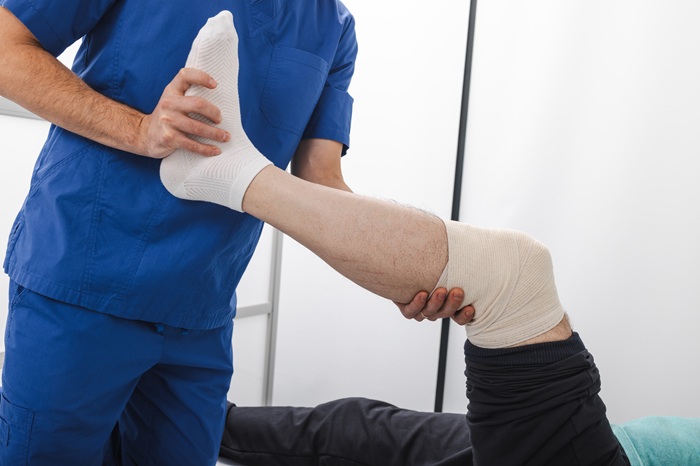
Common procedures used to treat acute knee injuries:
1. Joint Injections for Pain and Inflammation Relief
Joint injections are one of the first-line interventional treatments for acute knee injuries that involve significant swelling, inflammation, or localized pain. These injections may include:
- Corticosteroid Injections: These help reduce inflammation quickly and are often used in cases of ligament sprains or meniscus irritation.
- Hyaluronic Acid Injections: Sometimes used in patients with pre-existing joint degeneration, they can provide lubrication and cushion for the knee.
- Platelet-Rich Plasma (PRP) Injections: PRP uses the patient’s own platelets to stimulate healing of damaged ligaments and tendons, such as in partial tears of the ACL or MCL.
2. Aspiration and Fluid Drainage
In cases of severe swelling, a procedure called joint aspiration may be performed to remove excess fluid from the knee. This can relieve pressure and pain and is often done in conjunction with injections. If the fluid buildup is caused by bleeding (hemarthrosis) or infection, further evaluation and treatment will be necessary.
3. Bracing and Immobilization
While not a procedure in the traditional sense, custom bracing is often prescribed and fitted at injury clinics to support the knee and protect injured ligaments. For example:
- Hinged knee braces are used for MCL and LCL injuries.
- Immobilizers may be used temporarily for fractures or severe sprains while swelling subsides before further imaging or intervention
Bracing is usually combined with physical therapy to encourage healing while preventing further injury.
4. Minimally Invasive Arthroscopy
Knee arthroscopy is a surgical procedure where a small camera and instruments are inserted into the joint to evaluate and treat internal damage. It is commonly used for:
- Meniscus tears that won’t heal with conservative care
- Removal of loose bone fragments
- Repair or debridement of torn cartilage
- Ligament reconstruction in certain acute injuries (e.g., ACL tears)
Because arthroscopy is minimally invasive, recovery time is typically faster than with open surgery.
5. Ligament Reconstruction Procedures
Complete ligament tears—especially of the anterior cruciate ligament (ACL) or posterior cruciate ligament (PCL)—often require surgical reconstruction. In these cases, a tendon graft (from the patient or a donor) is used to rebuild the damaged ligament. These surgeries are often performed arthroscopically, followed by an intensive rehabilitation plan.
6. Fracture Repair and Fixation
For traumatic injuries that involve a patella fracture, tibial plateau fracture, or other bony structures of the knee, surgical repair may be necessary. This may involve:
- Open reduction and internal fixation (ORIF) using screws, plates, or rods
- External fixation in severe or compound fractures
Prompt surgical intervention is critical for stabilizing the joint and ensuring proper alignment during healing.
7. Shockwave Therapy and Regenerative Medicine
Newer, non-invasive options like extracorporeal shockwave therapy (ESWT) are sometimes used in the recovery phase to stimulate healing of soft tissue injuries. Regenerative procedures such as stem cell therapy may also be offered in select cases where surgery is not recommended or where patients wish to avoid more invasive options.
Conclusion
Acute knee injuries can be painful and disabling, but a wide range of treatment options—ranging from joint injections to surgical repair—can offer effective relief and help restore function. Pain management and orthopedic specialists work together to determine the most appropriate intervention based on imaging, physical exam findings, and patient goals. Early diagnosis and a personalized treatment plan are key to achieving a full recovery and preventing long-term complications.