
Lower Back Pain

Understanding Pain in the Spine, Muscles, Discs, and Nerves
Lower back pain can begin suddenly after a car accident, fall, heavy lift, awkward twist, or sports injury. It can also develop gradually from repetitive strain, prolonged sitting, poor movement patterns, or age-related changes in the spine. While many episodes improve with time and conservative care, pain that is severe, recurring, radiates into the leg, or comes with weakness or numbness deserves a closer look.
At Quantum Pain & Spine Injury, we evaluate lower back pain in the context of your injury, symptoms, work demands, activity level, and treatment goals—so care is focused on the likely cause, not just temporary symptom relief.
How common is lower back pain?
Lower back pain is one of the most common health conditions in the world and a major cause of disability.
- The World Health Organization estimates that 619 million people worldwide experienced low back pain in 2020, making it the leading cause of disability globally. who.int
- In the United States, about 26% of adults have low back pain at any given time, according to a National Institutes of Health resource. ncbi.nlm.nih.gov
- About 50% of people who have an episode of low back pain experience another episode within one year, according to the American Association of Neurological Surgeons. aans.org
These statistics show why it is important to evaluate persistent or recurring back pain early—especially after an accident or injury.

Common causes of lower back pain
Lower back pain may come from more than one structure at the same time. Common causes include:
- Muscle or ligament strain
Lifting, twisting, falling, sudden impact, or repetitive movements can overstretch muscles and ligaments in the lower back. - Disc injury or herniation
Discs cushion the bones of the spine. A bulging or herniated disc can irritate nearby nerves and may cause pain that travels into the buttock, thigh, leg, or foot. - Facet joint pain
Small joints in the back of the spine can become inflamed or irritated after trauma, repeated extension, twisting, or degenerative change. - Radiculopathy or sciatica
When a nerve root is irritated or compressed, pain may radiate from the low back into one or both legs. Numbness, tingling, burning, or weakness may also occur. - Sacroiliac joint dysfunction
Pain near the lower back, buttock, or hip can come from the joints connecting the spine to the pelvis. - Degenerative spine conditions
Arthritis, spinal stenosis, and degenerative disc changes can contribute to chronic or recurring pain, particularly as people age.
Comprehensive Diagnostic Assessments
Accurate diagnosis is the cornerstone of effective treatment. Our experienced medical professionals utilize advanced diagnostic tools, including MRI, CT scans, and X-rays, to thoroughly assess your lower back condition. We also perform physical examinations and review your medical history to understand the extent of your injuries and develop a targeted treatment plan.
How lower back pain may feel
Lower back pain can be localized or spread into nearby areas. Common symptoms include:
- Dull ache, tightness, or muscle spasm.
- Sharp pain when bending, standing, lifting, or twisting.
- Stiffness after sitting, driving, sleeping, or being inactive.
- Pain that spreads into the buttock, hip, groin, thigh, or leg.
- Numbness, tingling, burning, or weakness in the leg or foot.
- Pain that worsens with coughing, sneezing, or straining.
- Difficulty standing fully upright or returning to normal activities.
Pain that travels below the knee, causes weakness, or includes numbness and tingling may point to nerve involvement rather than a simple muscle strain.
When lower back pain needs urgent evaluation
Seek immediate medical care if low back pain is accompanied by:
- New loss of bowel or bladder control.
- Numbness in the groin, inner thighs, or “saddle” area.
- Sudden or worsening weakness in one or both legs.
- Severe pain following a major fall, crash, or other traumatic injury.
- Fever, unexplained weight loss, or pain that is constant and severe at night.
- Inability to walk or move safely.
These symptoms may indicate a serious spinal, nerve, infectious, or fracture-related condition that requires urgent evaluation.
You should also schedule an evaluation if your pain is persistent, getting worse, interferes with work or sleep, or returns each time you resume lifting, training, or normal activity.
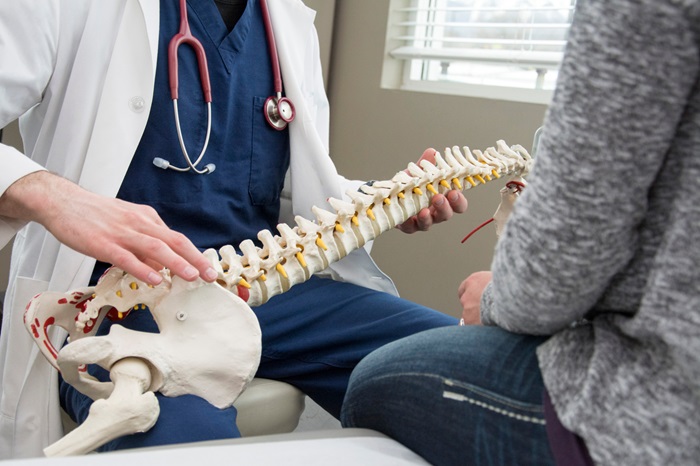
How we evaluate lower back pain
Your evaluation may include:
- A detailed history of the incident, injury mechanism, or activities that trigger pain.
- A physical examination of posture, range of motion, strength, reflexes, sensation, and gait.
- Nerve testing when radiating pain, numbness, or weakness is present.
- Evaluation of the hips, sacroiliac joints, and surrounding muscles.
- Imaging such as X-rays, MRI, or CT when a disc injury, fracture, nerve compression, or another structural condition is suspected.
The goal is to determine whether your pain is primarily muscular, joint-related, disc-related, nerve-related, or a combination.
Treatment options
Treatment is based on the underlying cause, severity of symptoms, and your daily demands. Your personalized plan may include:
- Activity modification and guided return to movement.
- Medications for pain, inflammation, or muscle spasm when appropriate.
- Physical therapy and rehabilitation to improve mobility, strength, and spinal control.
- Bracing when short-term support is appropriate.
- Trigger point, facet joint, epidural steroid, or sacroiliac joint injections for selected conditions.
- Peripheral magnetic stimulation, shockwave therapy, or regenerative options when clinically appropriate.
- Spine or orthopedic surgical evaluation if there is significant nerve compression, instability, fracture, or a condition that has not responded to non-surgical care.
Frequently Asked Questions
How do I know whether lower back pain is a muscle strain or sciatica?
A strain usually causes localized aching, stiffness, and spasm. Sciatica or radiculopathy is more likely to cause pain that travels into the buttock or leg, sometimes with numbness, tingling, burning, or weakness.
Can lower back pain start days after a car accident?
Yes. Adrenaline and inflammation can delay symptoms after trauma. Neck and lower back pain may become more apparent in the hours or days after a crash.
Will I need an MRI?
Not everyone needs an MRI immediately. Imaging is considered when symptoms suggest a disc injury, fracture, nerve compression, or another structural problem—or when pain is severe, persistent, or not improving as expected.
Should I rest completely when my lower back hurts?
Usually, prolonged bed rest is not recommended for uncomplicated back pain. Appropriate activity modification and guided movement are often more helpful, but your plan should reflect the specific injury and symptoms.
Can lower back pain come back after it improves?
Yes. Recurrence is common: the AANS notes that about half of people who experience an episode have another within a year.
Take the First Step Towards Relief
If lower back pain is limiting your work, sleep, exercise, or daily movement—or if it began after an accident, fall, or lifting injury—don’t wait for it to become a recurring problem. Quantum Pain & Spine Injury can identify the likely source of your pain and create a treatment plan to help you move with greater comfort and confidence.
References
- World Health Organization. Low back pain.
- National Institutes of Health / NCBI Bookshelf. Back Pain in the United States.
- American Association of Neurological Surgeons. Low Back Pain.