
Shoulder, Knee, and Joint Injuries at Work
When Everyday Tasks Turn Into Lasting Pain
Not every work injury is a dramatic accident. Sometimes it’s one wrong step on a wet floor, one heavy box carried up the stairs, or years of reaching, kneeling, and twisting that slowly wear away at your joints. Shoulder, knee, and other joint injuries at work can sneak up on you—and once they’re here, they can make every shift feel like a battle.
This page is for anyone whose job has started to hurt their joints: the stocker with shoulder pain, the nurse with aching knees, the mechanic with wrist problems, the construction worker whose hips and ankles feel older than they are.
Why Shoulder, Knee, and Joint Injuries Are a Big Deal at Work
Joint health is central to your ability to move, lift, push, pull, kneel, and reach—all core parts of many jobs. When joints are injured:
- Tasks that used to be routine (lifting overhead, squatting, carrying, climbing, pushing carts) become painful or impossible.
- You may start avoiding certain movements, which can lead to compensation and new injuries elsewhere.
- Productivity, attendance, and safety can all suffer.
Helpful context:
- Work‑related musculoskeletal disorders—including shoulder and knee problems—are consistently among the top causes of work‑related disability and lost work days in the United States.
- In physically demanding jobs, it’s common for over 20–30% of workers to report significant shoulder or knee pain linked to their tasks.
- Many joint injuries begin as “minor” aches and pains that are ignored—until they become chronic issues requiring more intensive treatment.
The sooner we address what’s going on in your joints, the easier it is to protect your work and your long‑term health.
How Shoulder Injuries Happen at Work

Shoulders are involved in almost everything above waist level. They’re busy joints—and vulnerable.
Common work‑related causes:
- Repeated overhead work (stocking shelves, painting, installing fixtures)
- Lifting or carrying objects away from your body
- Pushing or pulling heavy carts or equipment
- Working in tight spaces with arms extended for long periods
- Sudden overload or awkward catch when something slips
Patterns you might recognize:
Patterns you might recognize:
- Pain when reaching overhead or out to the side
- Difficulty lifting objects onto shelves
- Weakness when holding items at arm’s length
- Pain at night, especially when lying on the affected side
- Clicking, catching, or grinding sensations in the shoulder
These symptoms can reflect issues like rotator cuff strain or tear, shoulder impingement, bursitis, labral injury, or joint instability.
How Knee and Lower‑Extremity Injuries Happen at Work
Knees, hips, and ankles take the brunt of standing, walking, climbing, and kneeling.
Work‑related knee and joint injuries often stem from:
- Frequent squatting, kneeling, or crawling
- Climbing stairs, ladders, or equipment
- Carrying loads while walking or stepping up/down
- Working on hard surfaces without adequate cushioning
- Twisting motions under load or sudden direction changes
You might notice:
- Pain when going up or down stairs
- Aching knees after long shifts on your feet
- Swelling, stiffness, or a feeling of “catching” in the joint
- Sharp pain with certain movements or positions
- A sense that the knee or ankle might “give out”
These can be signs of ligament strain, meniscus irritation or tear, cartilage damage, tendonitis, bursitis, or early joint degeneration.
Other Work‑Related Joint Problems
It’s not just shoulders and knees. Work tasks can also injure:
- Wrists and hands – from gripping tools, repetitive assembly, lifting, or impact.
- Elbows – from repetitive lifting, pushing, pulling, or awkward reaching.
- Hips and ankles – from prolonged standing, uneven terrain, repetitive loads, or sudden twisting.
If a joint hurts during or after work and keeps coming back, it deserves attention.
What We Focus On During Your Visit
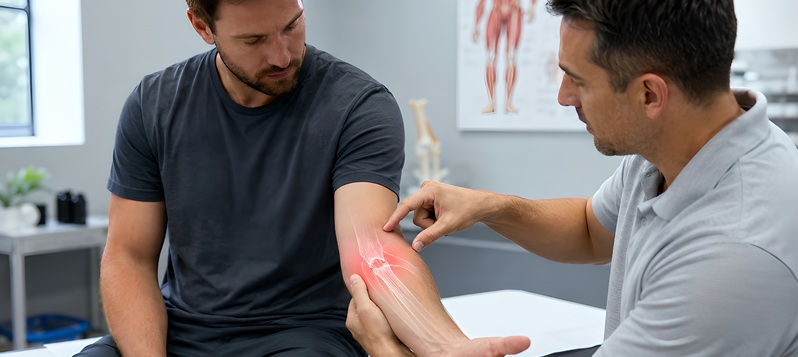
Rather than repeating the same structure as other pages, think of your visit as answering three key questions:
- What exactly in the joint is injured? Is it the cartilage, tendon, ligament, bursa, joint lining, or a combination?
- How is your job stressing that joint? Which tasks, tools, and positions are making it worse or preventing healing?
- What can we change—both in your body and at work—to help you recover?
To answer those, we:
- Talk through your job tasks in detail: lifting, reaching, kneeling, driving, standing, sitting, tool use, and pacing of your day.
- Examine the joint’s motion, strength, stability, and specific pain points.
- Look for signs of inflammation, instability, or nerve involvement
- Order imaging or additional tests when needed to clarify structural damage.
The goal is not just a generic label (“shoulder strain”), but a clear understanding of what’s injured and how your work interacts with it.
Treatment: Building a Plan Around You and Your Job
Joint injuries at work aren’t one‑size‑fits‑all. A warehouse worker, nurse, electrician, mechanic, and office worker may all have “shoulder pain” that needs different solutions.
Your plan might include:
- Targeted pain and anti‑inflammatory strategies when appropriate, to calm the joint enough to allow healing.
- Physical therapy to improve joint mobility, strengthen supporting muscles, correct movement patterns, and rebalance the way you use your body.
- Bracing or supports (shoulder slings, knee braces, wrist splints) used selectively to protect an injured joint while you heal.
- Injections (for example, around inflamed bursae or inside joints) to reduce pain and swelling when conservative measures aren’t enough.
- Advanced therapies like shockwave therapy or regenerative treatments to support tendon and soft‑tissue healing in chronic or stubborn cases.
- Ergonomic and work‑practice changes to reduce the strain on your joints going forward—task rotation, tool changes, surface modifications, and more.
If imaging shows structural problems that require surgery—like significant tears, instability, or advanced joint damage—our orthopedic and hand surgeons can evaluate and treat those as well.
Why Joint Injuries Shouldn’t Be Ignored
It’s easy to shrug off joint pain as “just getting older” or “part of the job.” That mindset is understandable—and dangerous.
Ignored joint injuries can lead to:
- Chronic pain that is much harder to treat later
- Compensatory movement patterns that injure other body parts
- Progressive cartilage damage and early arthritis
- Loss of strength and function, both at work and in daily life
- Increased risk of falls, missteps, and additional injuries
You don’t have to wait until you “can’t take it anymore” to seek help. If joint pain is affecting your work, sleep, or activities outside work, it’s already significant.
Frequently Asked Questions
Is my shoulder or knee pain really from work, even if I also exercise or play sports?
It might be from both—but if your symptoms reliably worsen with certain work tasks or long workdays, your job is at least a major contributor. We’ll help sort out how work and non‑work activities interact so your plan fits your whole life.
Can a small joint injury turn into arthritis?
Over time, yes. Repeated stress on an injured joint, especially if cartilage or alignment is affected, can accelerate wear‑and‑tear changes. Early treatment and smart modifications can slow that process dramatically.
Do I have to stop working until my joint is “perfect”?
Not usually. The aim is to keep you working as safely as possible, often with temporary restrictions or task adjustments. We’ll outline what’s reasonable for you and provide documentation when needed.
How do I know if my joint pain needs imaging?
If pain persists beyond a few weeks, is severe, involves locking, catching, giving‑way, or significant swelling, imaging is often helpful. We’ll base the decision on how your joint behaves during exam and on your history.
Will a brace solve the problem?
Braces can be very helpful, but they’re tools—not cures. They’re best used alongside strengthening, mobility work, and task changes, rather than as the only solution.
What if I’ve had joint pain for months or years and just kept pushing through?
It’s still worth being evaluated. Long‑standing injuries may need a different strategy, but many people improve significantly with the right combination of targeted treatment and workplace adjustments.
Can you help with paperwork for work injury claims or job modifications?
Yes. We can provide detailed records, treatment summaries, and letters supporting restrictions or accommodations, where appropriate.
Take Joint Pain at Work Seriously—And Take Action
Shoulder, knee, and joint pain at work doesn’t mean you’ve reached the end of what your body can do. It does mean your body is sending a message that something needs to change.