
Physical Therapy Referrals & Rehabilitation
Restoring Movement, Strength, and Confidence After Injury
Pain can make even ordinary movements feel uncertain. Getting out of bed, turning your head while driving, lifting at work, walking stairs, reaching overhead, or returning to exercise may become difficult after an accident or injury.
Physical therapy and rehabilitation are often central to recovery because they focus on what pain has taken away: mobility, strength, balance, endurance, and confidence in movement. While Quantum Pain & Spine Injury does not provide physical therapy directly, we coordinate referrals to a trusted network of therapy providers and remain involved in your overall care plan.

Coordinated Care Beyond the Referral
A therapy referral should be more than a name and phone number. Our team evaluates your condition, identifies the likely source of symptoms, and refers you to an appropriate therapy provider based on your diagnosis, injury location, functional needs, and recovery goals.
We can coordinate with your therapist by sharing relevant clinical information, imaging findings, restrictions, and procedure history when appropriate. As you progress, we review how you are responding to care and adjust the broader plan if pain, weakness, numbness, limited motion, or other symptoms are preventing progress.
Rehabilitation programs commonly combine physical, occupational, and behavioral approaches to help people with pain restore function and improve quality of life.mayoclinic
What Physical Therapy Can Address
A licensed physical therapist creates an individualized plan after assessing your symptoms, movement, strength, flexibility, balance, and daily activity demands. Therapy may help with:
- Neck and back pain, including whiplash and strain injuries.
- Radiating arm or leg pain related to nerve irritation.
- Shoulder, elbow, wrist, hand, hip, knee, ankle, and foot injuries.
- Muscle strains, sprains, tendon injuries, and joint instability.
- Pain and stiffness after fractures, immobilization, or surgery.
- Work-related lifting, reaching, standing, walking, and repetitive-motion limitations.
- Sports injuries and gradual return to training.
- Balance, dizziness, and movement concerns after selected injuries.
- Deconditioning, guarding, and fear of movement after persistent pain.
The aim is not to “push through” pain. Therapy is designed to safely improve function while considering the injury, your current symptoms, and the demands of your life.
What Your Rehabilitation Plan May Include
Your physical therapist determines the specific treatment plan. Depending on your needs, rehabilitation may include:
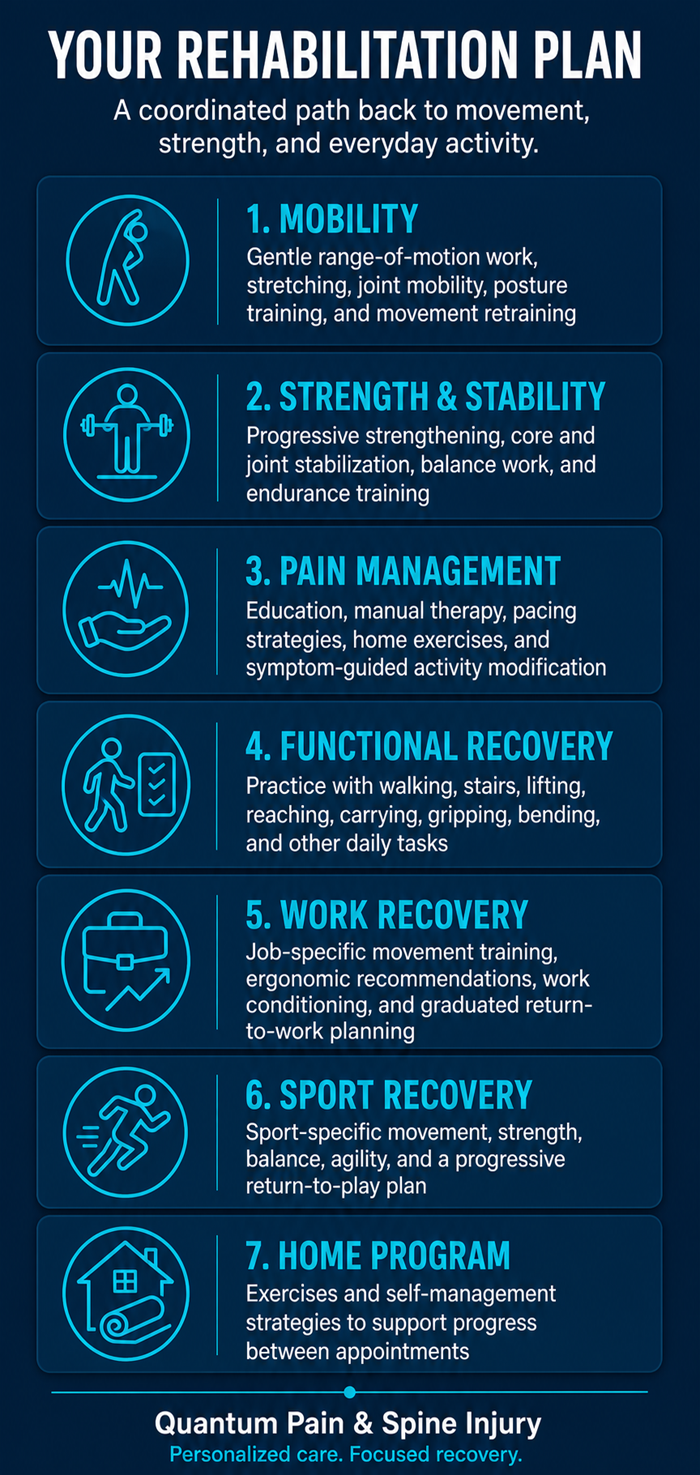
Physical therapy commonly uses flexibility, aerobic, and strengthening exercise to help reduce pain and improve function. newsnetwork.mayoclinic
When Therapy May Be Recommended
Therapy may be appropriate early in recovery or after a period of evaluation, depending on the nature of the injury. We may recommend a referral when you have:
- Pain that limits normal movement or daily tasks.
- Stiffness, reduced range of motion, or loss of flexibility.
- Weakness, poor balance, reduced endurance, or instability.
- Difficulty returning to work, driving, exercise, or sports.
- Persistent symptoms after a strain, sprain, accident, or repetitive-use injury.
- Pain that improves temporarily with rest but returns with activity.
- Recovery needs after a procedure, surgery, fracture, or period of immobilization.
For people whose injury affects their ability to work, the American Physical Therapy Association’s orthopedic guidance addresses physical-therapy evaluation and management strategies intended to optimize work participation after injury or illness. apta
How Therapy Fits With Pain Management
Physical therapy and pain management often work best together. When pain is severe enough to limit exercise or movement, diagnostic evaluation, medication management, image-guided procedures, or other treatments may help create an opportunity to participate more fully in rehabilitation.
In turn, therapy can help patients build the strength, mobility, and movement control needed to support longer-term improvement. The CDC recommends maximizing appropriate nonpharmacologic treatments, including exercise therapy, for many pain conditions.cdc
Your care plan may include one or more of the following:
- Diagnostic evaluation and appropriate imaging.
- Referral to physical therapy, occupational therapy, vestibular therapy, or another rehabilitation provider.
- Home exercise and activity guidance.
- Work, activity, lifting, driving, or return-to-sport restrictions.
- Interventional pain procedures when clinically appropriate.
- Behavioral-health care for stress, sleep disruption, fear of movement, anxiety, or PTSD symptoms after injury.
- Surgical consultation when significant structural injury or progressive neurological symptoms require it.
Choosing The Right Therapy Provider
Our referral network includes providers with experience treating musculoskeletal, spine, orthopedic, work-related, sports, and accident-related injuries. When appropriate, we consider:
- Your diagnosis and affected body region.
- The need for specialized rehabilitation, such as vestibular, hand, post-surgical, orthopedic, work-conditioning, or sports-focused therapy.
- Location, scheduling needs, insurance requirements, and language preferences.
- Your work duties, activity level, and recovery goals.
- Whether the therapist can coordinate with your medical team.
You are always part of the decision. If you already have a preferred therapy provider, let us know so we can discuss whether that referral is appropriate for your care plan.
What to Expect After a Referral
- Initial therapy evaluation: Your therapist reviews your injury, symptoms, functional limits, and goals.
- Individualized treatment plan: You receive a plan that may include in-office sessions, guided movement, and a home program.
- Progressive rehabilitation: Activities are adjusted as pain, strength, range of motion, and function improve.
- Communication and reassessment: If symptoms worsen, progress stalls, or new concerns arise, we can reassess your diagnosis and determine whether changes to the care plan are needed.
- Return to activity: Your therapist and medical team help guide a safe return to work, exercise, driving, sport, and other important activities.
Frequently Asked Questions
Do you provide physical therapy in your office?
No. Quantum Pain & Spine Injury does not provide physical therapy directly. We refer patients to trusted therapy providers in our network and coordinate care as appropriate.
Can I choose my own physical therapist?
Yes. If you have a preferred provider, tell us. We can help determine whether that provider is appropriate for your diagnosis and referral needs.
Do I need physical therapy before an injection or procedure?
It depends on your condition. Some patients begin with therapy, while others may need additional diagnostic testing, pain relief, or specialist evaluation first. Your treatment plan is individualized.
What if therapy is making my symptoms worse?
Some soreness can occur when activity increases, but worsening pain, new numbness, weakness, dizziness, or loss of function should be reported promptly. We can work with your therapy team to reassess the plan.
How long will rehabilitation take?
Recovery timelines vary based on the diagnosis, severity of injury, body area involved, prior health, job demands, consistency with treatment, and how your body responds. Your therapist can discuss expected milestones after completing an evaluation.
Get Help Today!
If pain, weakness, stiffness, instability, or limited movement is preventing you from returning to work, exercise, driving, or everyday life, Quantum Pain & Spine Injury can help coordinate the rehabilitation support you need. We will evaluate your condition, connect you with an appropriate therapy provider, and guide your care as you work toward meaningful recovery.
References
- Mayo Clinic. Pain Rehabilitation Center: Overview. Physical, occupational, and behavioral therapies can help people with chronic pain restore activity and improve quality of life.[mayoclinic]
- Mayo Clinic. Pain Rehabilitation: Nondrug Options for Managing Chronic Pain. Discusses flexibility, aerobic, and strengthening exercise as core components of physical therapy.[newsnetwork.mayoclinic]
- American Physical Therapy Association. Clinical Guidance to Optimize Work Participation After Injury or Illness.[apta]
- Centers for Disease Control and Prevention. Nonopioid Therapies for Pain Management.[cdc]