
Weightlifting Injuries
Treatment for Back, Shoulder, and Joint Pain From Lifting
Weightlifting injuries can happen in a single rep or build up over time from repeated strain, poor mechanics, or training too hard too soon. Whether you were injured during deadlifts, squats, bench press, overhead press, or Olympic lifts, Quantum Pain & Spine Injury helps you find the cause of the pain and recover safely.
How Weightlifting Injuries Happen
Weightlifting places a lot of force through the spine, shoulders, knees, hips, elbows, wrists, and hands. That stress is normal, but when load, volume, or technique is off, injury risk rises.
Common causes include:
- Lifting too much weight too quickly.
- Poor form or loss of control during a lift.
- Fatigue from overtraining.
- Skipping warm-ups or mobility work.
- Returning to lifting before a prior injury has healed.
- Repeating the same movement pattern without balance or recovery.
Some injuries happen suddenly, such as a sharp pain during a lift. Others develop gradually as soreness, stiffness, or weakness that gets worse each week.
Common Weightlifting Injuries
Back Injuries
The lower back is one of the most common areas affected in weightlifting.
You may notice:
- Pain during deadlifts, squats, or rows.
- Muscle spasm or tightness.
- Pain with bending, twisting, or standing up straight.
- Pain that radiates into the buttock or leg.
Back injuries may involve muscle strain, disc irritation, or facet joint pain.
Shoulder Injuries
Shoulders take a lot of stress during pressing and overhead lifts.
Common signs include:
- Pain during bench press or overhead press.
- Clicking, catching, or weakness.
- Difficulty lifting the arm overhead.
- Night pain or pain when lying on the affected side.
These symptoms may point to rotator cuff strain, impingement, labral injury, or joint inflammation.
Knee Injuries
Knees can be injured during squats, lunges, jumps, and split movements.
Possible signs include:
- Pain when squatting or climbing stairs.
- Swelling after lifting.
- Pain around the front of the knee or along the joint line.
- A feeling of instability or catching.
Elbow, Wrist, and Hand Injuries
Heavy gripping, pressing, and pulling can irritate the smaller joints of the upper extremity.
Watch for:
- Elbow pain during curls, presses, or pulling exercises.
- Wrist pain when supporting weight in a bent-back position.
- Hand pain or numbness from gripping bars, dumbbells, or straps too hard.
When Weightlifting Pain Is More Than Soreness
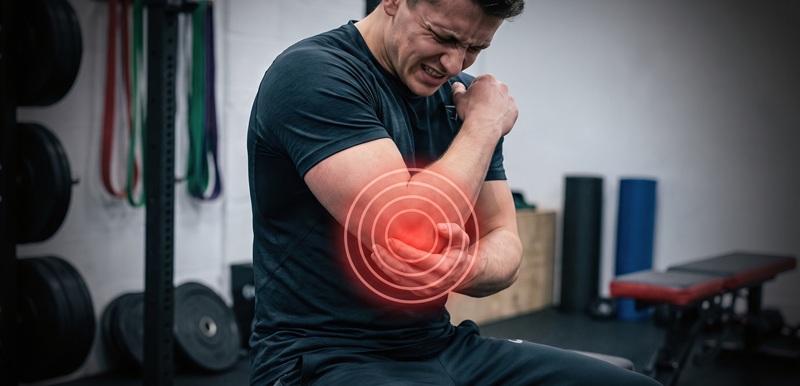
Normal post-workout soreness is usually dull, temporary, and improves over a few days. Pain that suggests injury tends to behave differently.
Be concerned if you have:
- Sharp or sudden pain during a lift.
- Pain that keeps getting worse.
- Weakness or loss of control.
- Swelling or visible bruising.
- Pain that changes your form.
- Numbness, tingling, or radiating pain.
- Pain that affects daily activities, sleep, or work.
If your body is warning you that something is wrong, it is better to check early than push through and risk making it worse.
How We Evaluate Weightlifting Injuries
We look at both the injury and the way you train.
Your visit may include:
- A detailed review of the lift that caused the pain.
- Questions about recent training changes, load increases, and recovery.
- A physical exam of strength, range of motion, and tenderness.
- Assessment of movement patterns and lifting mechanics.
- Imaging or additional tests if we suspect a tear, disc issue, fracture, or other structural problem.
The goal is to determine exactly what is injured and whether you need rest, rehab, injections, or a surgical opinion.

Treatment Options
Your treatment plan depends on the area injured and how severe it is. Common options include:
- Activity modification or temporary rest from specific lifts.
- Physical therapy to restore strength, mobility, and control.
- Bracing or support when appropriate.
- Medications for pain and inflammation when needed.
Injections for joint or soft tissue inflammation. - Shockwave or regenerative treatments for stubborn tendon and soft tissue injuries.
- Surgical evaluation for severe tears or structural injuries.
We focus on getting you back to lifting safely, not just getting rid of pain for a few days.
Returning to the Bar Safely
A good return plan matters just as much as the treatment itself. Too many lifters return at full intensity before they are ready.
We help you:
- Rebuild tolerance gradually.
- Modify exercises that trigger symptoms.
- Progress load, volume, and intensity in a controlled way.
- Correct technique issues that contributed to the injury.
- Return to training with less fear of re-injury.
The best way back is usually not all at once. It is step by step.
Frequently Asked Questions
Can I keep lifting if the pain is mild?
Maybe, but only if it does not worsen, change your form, or cause weakness. Mild pain can still signal an injury that needs attention.
Do all weightlifting injuries need imaging?
No. Many can be diagnosed with a good exam and history. Imaging is more useful when we suspect a tear, disc injury, fracture, or other deeper problem.
How long will recovery take?
That depends on the injury. Some strains improve in a few weeks, while joint or tendon injuries can take longer. Early treatment usually shortens recovery time.
Should I stop lifting completely?
Not always. In many cases, we can modify your training so you can stay active while healing.
What if my pain started weeks ago and I kept training through it?
That is common. It may mean the injury has become more irritated or chronic. It is still worth getting evaluated.
Can you help me return to heavy lifting?
Yes. Part of treatment is helping you return to the lifts you want to do, with the right progressions and safeguards.
Get Expert Care
Weightlifting injuries do not have to end your progress. With the right diagnosis and treatment plan, you can recover strength, protect your joints, and return to the gym with more confidence.