
Lifting Injuries at Work
When Your Job Hurts Your Back, Neck, and Joints
Lifting is part of many jobs—whether you work in a warehouse, construction site, healthcare setting, retail store, office, or service role. But when lifting tasks are heavy, repetitive, rushed, or done in awkward positions, they can seriously injure your muscles, discs, joints, and nerves. As part of our Work Injuries section, this page explains how lifting injuries at work happen, what symptoms to watch for, and how Quantum Pain & Spine Injury can help you recover and return to work safely.
How Lifting Injuries Happen on the Job
Work‑related lifting injuries often occur when you:
- Lift loads that are too heavy or poorly distributed
- Bend and twist at the same time while lifting
- Reach overhead or far away from your body with weight
Lift repeatedly throughout the day without enough rest or support - Work in tight, cluttered, or uneven spaces
- Rush or lift without proper equipment (dollies, carts, team lifting)
These movements can strain and damage:
- Lower back and spine
- Neck and upper back
- Shoulders and rotator cuff
- Hips, knees, and ankles
- Wrists, elbows, and hands
The injury might be sudden (you feel something “pull” or “give” immediately) or gradual (pain builds over days or weeks as lifting continues).
Common Lifting‑Related Work Injuries
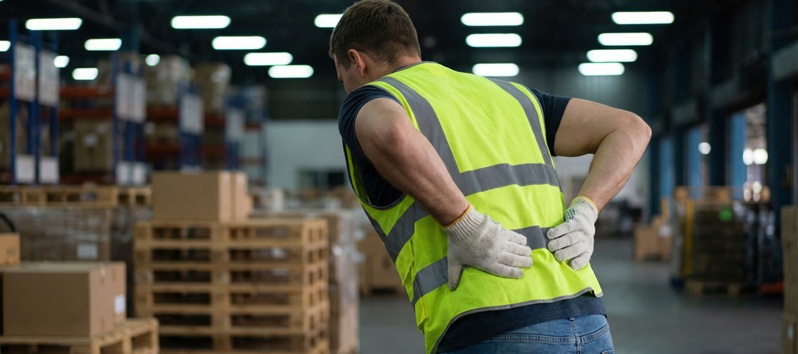
Lower Back Injuries at Work
Lifting is one of the most common causes of lower back pain on the job. Workers may develop:
- Lumbar muscle strains and ligament sprains
- Disc bulges or herniations
- Facet joint irritation or inflammation
- Sciatica (nerve pain radiating down the leg)
Typical symptoms include:
- Sudden or gradual lower back pain after lifting
- Muscle spasms and tightness
- Pain with bending, twisting, or lifting again
- Pain radiating into buttocks or legs
- Difficulty standing up straight or changing positions
Neck and Upper Back Injuries at Work
Lifting and carrying with poor posture or overhead tasks can injure the neck and upper back.
You may notice:
- Neck pain and stiffness after lifting or carrying
- Pain between the shoulder blades
- Headaches starting at the base of the skull
- Limited ability to turn or tilt the head
- Shoulder and upper‑back aching that worsens over the workday
These injuries overlap with Back and Neck Injuries at Work and often require combined evaluation.
Shoulder, Knee, and Joint Injuries at Work
Lifting heavy or awkward objects can stress multiple joints at once, leading to:
- Rotator cuff strains or tears
- Shoulder impingement or bursitis
- Knee ligament sprains or meniscus irritation from lifting and pivoting
- Hip and ankle strain from stabilizing heavy loads
- Wrist and elbow overuse injuries from gripping and carrying
This content ties directly into our Shoulder, Knee, and Joint Injuries at Work page, where each joint is covered in more detail.
Repetitive Strain From Lifting
Not every lifting injury is a one‑time “bad lift.” Many workers develop Repetitive Strain Injuries from:
- Frequent light‑to‑moderate lifting
- Loading/unloading tasks repeated all day
- Stocking shelves or moving inventory
- Patient handling in healthcare settings
- Repetitive tool use with lifting motions
Over time, these repetitive movements cause small, repeated tissue damage that builds into significant pain and functional limitation.
Signs Your Work‑Related Lifting Injury Needs Attention

While most work lifting injuries can be evaluated in our clinic, seek immediate emergency care if you experience:
- Sudden inability to move your legs
- Loss of bladder or bowel control
- Numbness in the groin or inner thigh area
Severe back pain with fever or feeling very ill - Progressive, severe weakness in legs or feet
These signs may indicate serious spinal or nerve conditions that require urgent treatment.
When a Lifting Injury at Work Is an Emergency
While most work lifting injuries can be evaluated in our clinic, seek immediate emergency care if you experience:
- Sudden inability to move your legs
- Loss of bladder or bowel control
- Numbness in the groin or inner thigh area
- Severe back pain with fever or feeling very ill
- Progressive, severe weakness in legs or feet
These signs may indicate serious spinal or nerve conditions that require urgent treatment.
How Quantum Evaluates Lifting Injuries at Work

Work‑Focused History
We start by understanding the work context of your injury:
- Your job role and typical lifting tasks
- The specific incident or pattern that led to pain
- How long you’ve been experiencing symptoms
- Work shifts, load weights, and body positions used
- Any prior work injuries or pre‑existing conditions
We connect your pain to the realities of your job so the treatment plan fits your work demands.
Physical and Neurological Examination
Your clinician will assess:
- Range of motion in your back, neck, shoulders, and other involved joints
- Muscle strength and endurance in key lifting muscles (core, hips, shoulders)
- Tenderness, swelling, or deformity around injured areas
- Joint stability and movement quality
- Reflexes, sensation, and motor function to detect nerve involvement
- Posture, lifting mechanics, and how you move during work‑like tasks
Diagnostic Testing When Needed
If exam findings suggest deeper structural injury, we may order:
- X‑rays to check for fractures or spinal alignment issues
- MRI to evaluate discs, nerves, ligaments, and soft tissues
- CT scans for complex bone or joint injuries
- Nerve conduction studies if nerve damage is suspected
This approach helps distinguish simple muscle strain from more serious disc, joint, or nerve problems.
Surgical Evaluation and Care
Surgical Evaluation and Care
When necessary, our surgeons can provide:
- Arthroscopic repair of joint injuries.
- Reconstruction of torn ligaments or tendons.
- Spine surgery for severe disc, nerve, or structural problems.
- Hand and wrist surgery for complex injuries.
We aim for the least invasive effective option, with careful consideration for your job demands and long‑term function.
Treatment Options for Work‑Related Lifting Injuries
Your treatment plan will be customized, but often includes a mix of:
Conservative Care
- Temporary work restrictions and task modification
- Targeted medications for pain and inflammation when appropriate
- Bracing or supports (lumbar belts, shoulder braces, wrist splints) used strategically
- Physical therapy focused on pain relief, mobility, strength, and safe lifting mechanics
Interventional Procedures
For more persistent or severe pain, our pain management physicians may recommend:
- Epidural steroid injections for disc‑related nerve pain
- Facet joint injections for spine joint irritation
- Medial branch blocks and, when appropriate, radiofrequency ablation for longer‑term relief
- Joint injections for shoulder, hip, knee, or other involved joints
- Trigger point injections to relieve muscle spasms and knots that developed after heavy lifting
Advanced Therapies
- Shockwave therapy to stimulate healing in tendons and ligaments stressed by lifting
- Regenerative options (such as PRP‑based approaches) to support repair of soft‑tissue injuries
- Peripheral magnetic stimulation to reduce muscle spasm and improve circulation in injured areas
Surgical Evaluation When Necessary
If imaging or persistent symptoms show structural damage that needs surgery, our orthopedic, spine, or hand surgeons may consider:
- Disc decompression or stabilization procedures
- Arthroscopic shoulder, knee, or hip repair
- Tendon or ligament repair or reconstruction
We always aim for the least invasive effective treatment and consider your job demands when planning surgery and recovery.
Returning to Work After a Lifting Injury
Going back to work is a key goal, but how you return matters. We help you navigate this by:
- Writing clear work restrictions (weight limits, posture/position guidelines, frequency limits on lifting tasks).
- Designing gradual return‑to‑work plans that build your tolerance and confidence step by step.
- Coordinating with employers, case managers, or therapists (when appropriate) so your duties match your current capabilities.
- Monitoring your progress and adjusting restrictions as strength and function improve.
This ties closely with other pages in the Work Injuries section, such as Back and Neck Injuries at Work, Repetitive Strain Injuries, and Shoulder, Knee, and Joint Injuries at Work, to create a complete path from injury to safe return.
Frequently Asked Questions
Do I have to stop lifting entirely until I’m healed?
Not always. In many cases, we recommend modifying how and what you lift, rather than stopping all movement. Some lifting may be safe with proper technique and weight limits. We’ll give you specific guidance based on your injury and job.
How do I know if my lifting injury is serious or just “sore muscles”?
If pain is improving steadily over several days and doesn’t affect your function, it may be mild strain. If pain is intense, getting worse, radiates into limbs, causes weakness or numbness, or affects sleep and work, it’s likely more serious and should be evaluated.
Can a lifting injury at work be covered as a work injury even if it built up over time?
Yes. Gradual onset from repetitive lifting is still considered a work‑related injury in many cases. We document how your tasks contribute to your symptoms and provide detailed medical records for use in work injury claims processes.
Will you work with my employer or case manager?
With your permission, we can communicate with employers, case managers, or rehabilitation coordinators to explain restrictions, treatment plans, and expected timelines. The goal is to align your job duties with your healing needs.
Can lifting injuries cause permanent damage if I ignore them?
They can. Chronic disc problems, joint degeneration, and recurring muscle strain can lead to lasting pain and reduced function. Early, appropriate treatment is the best way to prevent long‑term issues.
How long will it take before I can lift normally again?
Recovery time depends on the type and severity of injury, your overall health, and your adherence to treatment. Some injuries improve within weeks; others take months. We’ll give a realistic timeframe and update it as you progress.
Don’t Let Work‑Related Lifting Injuries Define Your Future
If lifting at work has left you with new pain, stiffness, weakness, or radiating symptoms, it’s a sign your body needs attention—not just rest and hope.