
Overuse Injuries
When Repetition Becomes the Problem
Not every sports injury comes from one big moment. Sometimes the damage builds quietly—through repetition, fatigue, and doing a little too much, too often. Overuse injuries are common in athletes, gym-goers, runners, throwers, and anyone whose training or workload asks the same tissues to work again and again without enough recovery.
This page focuses on what overuse injuries are, how to recognize them early, and how Quantum Pain & Spine Injury helps you recover without losing momentum.
What Is an Overuse Injury?
An overuse injury happens when stress is applied to a muscle, tendon, bone, or joint faster than the tissue can repair itself. Instead of one obvious injury event, the problem develops gradually.
Common causes include:
- Repeating the same motion over and over.
- Increasing training volume or intensity too quickly.
- Poor mechanics or technique.
- Inadequate rest and recovery.
- Training through pain or fatigue.
- Improper equipment, footwear, or ergonomics.
Overuse injuries can affect almost any part of the body, but they most often show up in areas that absorb repeated force: the shoulders, elbows, wrists, hips, knees, shins, ankles, and feet.
Why Overuse Injuries Matter

Overuse injuries are a major reason people miss training sessions, lose performance, or end up needing longer rehab than expected. Research in sports medicine consistently shows that overuse problems make up a large proportion of athletic injuries, especially in sports with repetitive throwing, running, jumping, lifting, or overhead motion.
Helpful context:
- Overuse injuries often account for more than half of sports injuries in active and competitive groups.
- Tendon-related overuse conditions are especially common, with some studies showing that a large percentage of recreational and competitive athletes experience tendon pain at some point in their training life.
- Running-related overuse injuries are among the most frequent, with roughly 4 out of 10 runners developing a training-related injury in a given year.
- The longer pain is ignored, the more likely it is to become chronic and harder to treat.
In other words: if your pain is tied to repetitive tasks at work, the gym, or sport, it’s not “just part of the job” or “normal soreness.” It’s a problem worth addressing early.
Signs You May Have an Overuse Injury
Overuse injuries often start subtly. You may not remember one exact moment when something went wrong. Instead, you notice that pain is slowly becoming part of the routine.
Watch for:
- Pain that begins during activity and lingers afterward.
- Stiffness when you first start moving.
- Soreness that gets worse week by week.
- Reduced performance, endurance, or speed.
- Tenderness in one specific area.
- Swelling or a warm feeling around the injured tissue.
- Pain that improves with rest but returns when you resume training.
- A change in your movement pattern to avoid pain.
The danger of overuse injuries is that they can be easy to ignore at first, especially when you’re still able to train or compete.
Common Overuse Injuries We See
Tendon Problems
Tendons connect muscle to bone and are vulnerable to repeated stress. Tendon overuse is one of the most common injury patterns in both athletes and active workers.
Common examples include:
- Achilles tendinopathy.
- Patellar tendinopathy.
- Rotator cuff tendinopathy.
- Elbow tendon pain from throwing or lifting.
- Wrist and forearm tendon irritation.
These injuries often cause pain with movement, stiffness after rest, and tenderness at the affected tendon. Tendon injuries can be especially stubborn because tendons heal more slowly than muscle tissue.
Stress Reactions and Stress Fractures
When bone is repeatedly loaded without enough recovery, the tissue can develop a stress reaction or progress to a stress fracture. This is common in runners, jumpers, dancers, and athletes who suddenly increase training load.
Signs include:
- Pain that starts with activity and later occurs at rest.
- Localized tenderness over a bone.
- Pain with impact, jumping, or running.
- Worsening pain even when you try to “push through.”
These injuries matter because stress fractures are one of the most common causes of time-loss in distance runners and jumping sports.
Bursitis and Joint Irritation
Bursae are small fluid-filled sacs that reduce friction near joints. Repetitive movement can inflame them, causing pain and swelling around the shoulder, hip, elbow, knee, or ankle.
Muscle and Fascia Overload
Repeated movement can also irritate muscles and surrounding soft tissue. This may feel like:
- Persistent tightness.
- Muscle fatigue that arrives too early.
- Ache or burning with repeated activity.
- Soreness that doesn’t fully clear between workouts or shifts.
Why Overuse Injuries Happen
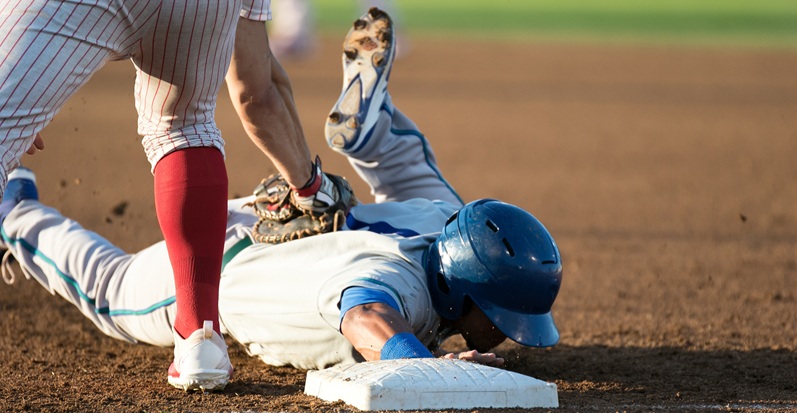
Overuse injuries are rarely about one “bad” workout or one “bad” practice. They usually happen when the total load on the body exceeds the body’s ability to recover.
Contributors often include:
- Rapid increases in mileage, reps, weight, or intensity.
- Returning to sport too soon after a break.
- Technique flaws that place too much stress on one area.
- Poor mobility or weakness in supporting muscles.
- Training on hard surfaces or with worn equipment.
- Work demands that add to athletic stress.
For example, a runner who adds speed work too quickly may develop shin or Achilles pain. A thrower who ramps up pitching volume may develop shoulder or elbow symptoms. A lifter who repeats heavy pressing without recovery may develop shoulder or wrist issues.
Why Early Treatment Matters
The earlier you address an overuse injury, the better the outcome tends to be. In sports medicine, delayed treatment is one of the biggest reasons a manageable injury becomes a season-ending one.
Early attention can:
- Shorten recovery time.
- Reduce the chance of needing more invasive treatments.
- Prevent progression to chronic pain or nerve damage.
- Make it easier to stay active with safe modifications instead of being forced into a long shutdown.
If you’re thinking, “It’s not that bad yet,” but it’s affecting your work or daily life, that’s exactly the time to come in.
How We Evaluate Overuse Injuries

We take overuse injuries seriously because they’re often a sign that something in your training, mechanics, or recovery needs adjustment.
Your evaluation may include:
- A detailed discussion of your training schedule, sport, workload, and recent changes
- A review of the specific activities that trigger pain.
- A physical examination of strength, flexibility, range of motion, and tenderness.
- Assessment of movement mechanics and compensations.
- Imaging or additional testing when needed to rule out stress fractures, tears, or other structural problems.
The goal is not just to identify the sore spot, but to understand why it’s being overloaded.
Treatment Options for Overuse Injuries
Treatment depends on the tissue involved and how long the problem has been developing.
Your plan may include:
- A temporary reduction in training volume or work load.
- Activity modification rather than complete shutdown whenever safe.
- Physical therapy to restore strength, mobility, and movement control.
- Taping, bracing, or support strategies to reduce strain.
- Targeted pain or anti-inflammatory treatment when appropriate.
- Shockwave therapy for stubborn tendon problems.
- Regenerative medicine or biologic treatments in selected cases.
- Gradual return-to-activity planning so the injury heals without rushing back too soon.
The objective is to let the tissue recover while preserving as much function as possible.
Preventing the Injury From Coming Back
Overuse injuries often return if the root cause isn’t addressed. Prevention usually comes down to a few key habits:
- Increase training load gradually.
- Build in rest and recovery days.
- Work on technique, not just intensity.
- Strengthen supporting muscles.
- Replace worn footwear or equipment.
- Pay attention to early warning signs instead of pushing through.
A small adjustment now can save weeks or months later.
Frequently Asked Questions
Is an overuse injury the same as a repetitive strain injury?
They overlap a lot. Both are caused by repeated stress over time rather than one sudden event. The exact term depends on the tissue and the activity involved.
Can I keep training if it’s “just a little sore”?
Mild soreness can be normal, but pain that gets worse, lingers, or changes your mechanics is a warning sign. Continuing without modification can turn a manageable issue into a much bigger injury.
How do I know if my pain is just soreness or a real injury?
Normal soreness usually improves with rest and does not steadily worsen. An overuse injury tends to return with activity, become more localized, and interfere with performance or daily movement.
Do overuse injuries always need imaging?
Not always. Many can be diagnosed through history and exam. Imaging becomes more important when we suspect a stress fracture, tendon tear, or another structural issue.
Will I have to stop my sport completely?
Not necessarily. In many cases, we can modify training so you stay active while the injury heals. The right answer depends on the body part involved and how severe the problem is.
How long does recovery take?
It varies. Some overuse injuries improve in a few weeks with the right changes; others need a longer rehab period. Early evaluation usually shortens the overall recovery time.
Can overuse injuries become permanent?
If ignored long enough, yes. Chronic tendon damage, stress fractures, and joint wear can become lasting problems. Early care is the best way to protect long-term function.
Take Sports Injuries Seriously—And Take Action
Overuse injuries may be slow to announce themselves, but they are your body’s way of saying the current load is too much. The sooner you respond, the easier it is to recover and return to your sport, gym routine, or activity level with confidence.