
Whiplash
Expert Diagnosis & Treatment for Neck Injuries After Car Accidents
Experiencing neck pain and stiffness after a car accident? You may have whiplash—one of the most common and underestimated car accident injuries. At Quantum Pain & Spine Injury, our multidisciplinary team specializes in diagnosing and treating whiplash injuries before they become chronic pain conditions.
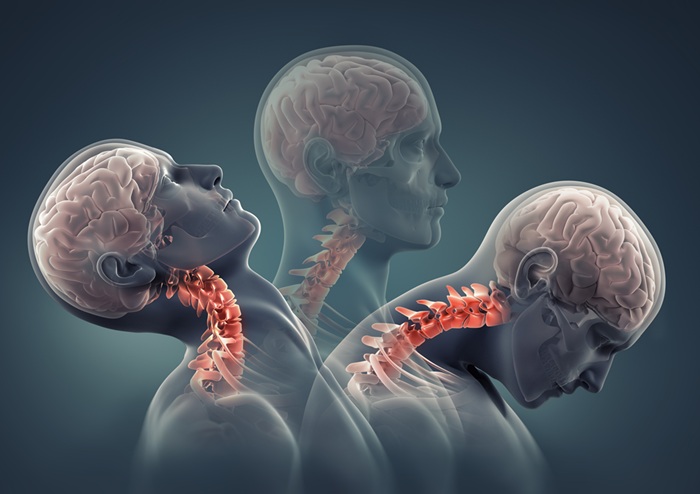
Whiplash occurs when your head and neck are suddenly forced backward and forward in a rapid whipping motion during a collision. This violent movement strains muscles, ligaments, tendons, discs, and nerves in the cervical spine—often causing symptoms that don’t appear until hours or days after impact.
Whiplash Statistics: Why This Injury Matters
Prevalence & Impact:
- Approximately 3 million whiplash injuries occur in the United States each year
- Whiplash accounts for over 25% of all car accident-related injuries
- Up to 50% of whiplash patients develop chronic neck pain lasting more than 6 months
- Rear-end collisions cause 85% of whiplash cases
- Whiplash can occur at impact speeds as low as 5-10 mph—you don’t need a high-speed collision to sustain serious injury
Recovery & Outcomes:
- 60-70% of patients experience significant improvement with proper treatment within 3 months
- 30-40% of untreated whiplash patients develop chronic symptoms
- Early intervention reduces chronic pain risk by up to 50%
- Delayed treatment (more than 2 weeks post-injury) is associated with longer recovery times and worse outcomes
- Women are twice as likely as men to develop chronic whiplash symptoms, possibly due to neck muscle strength differences
Economic Impact:
- Whiplash injuries cost an estimated $29 billion annually in the U.S. in medical expenses and lost productivity
- Average medical costs for whiplash treatment range from $3,000-$12,000 depending on severity
- Chronic whiplash can result in months of missed work and permanent disability
These statistics underscore the importance of immediate evaluation and evidence-based treatment after any car accident involving sudden head and neck movement.
What Happens to Your Neck During Whiplash
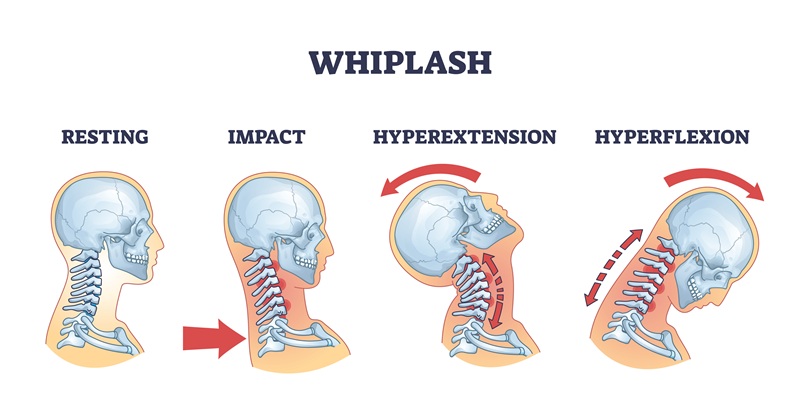
The Mechanism of Injury:
Phase 1: Hyperextension (0-100 milliseconds)
The impact forces your torso forward while your head remains stationary due to inertia, causing your neck to extend backward beyond its normal range. Soft tissues on the front of your neck stretch and may tear.
Phase 2: Hyperflexion (100-200 milliseconds)
Your head snaps forward rapidly, forcing your neck into excessive flexion. The back of your neck experiences stretch and strain. This dual motion happens faster than your muscles can react to protect the spine.
Structures Injured:
- Cervical muscles (sternocleidomastoid, scalenes, trapezius)
- Cervical ligaments (anterior and posterior longitudinal ligaments)
- Facet joint capsules
- Intervertebral discs (annular tears or herniations)
- Nerve roots (compression or irritation)
- Blood vessels and soft tissues
Whiplash Symptoms: What to Watch For
Symptoms may appear immediately or develop over 24-72 hours as inflammation increases.
Common Symptoms:
- Neck pain and stiffness
- Reduced range of motion (difficulty turning head or looking up/down)
- Headaches (especially at the base of the skull)
Shoulder pain and upper back pain - Tenderness along the neck and shoulders
- Pain that worsens with neck movement
Neurological Symptoms (Indicate Nerve Involvement):
- Radiating pain into shoulders, arms, or hands
- Numbness or tingling in arms or fingers
- Weakness in arms or hands
- Electric shock sensations down the spine
Associated Symptoms:
- Dizziness or vertigo
- Blurred vision
- Ringing in ears (tinnitus)
- Difficulty concentrating or “brain fog”
- Memory problems
- Fatigue
- Sleep disturbances
- Jaw pain (TMJ dysfunction)
- Difficulty swallowing
Red Flag Symptoms (Seek Emergency Care):
- Severe, unrelenting pain
- Progressive weakness in arms or legs
- Loss of bladder or bowel control
- Difficulty walking or maintaining balance
- Severe headache with neurological changes
Whiplash Severity Grades
Medical professionals classify whiplash using the Quebec Task Force (QTF) grading system:
Grade 0: No neck complaints, no physical signs
Grade I: Neck pain, stiffness, or tenderness only; no physical signs of injury
Grade II: Neck complaints plus musculoskeletal signs (decreased range of motion, point tenderness)
Grade III: Neck complaints plus neurological signs (decreased or absent reflexes, weakness, sensory deficits)
Grade IV: Neck complaints with fracture or dislocation
Most whiplash injuries are Grade I or II. Grade III and IV require immediate specialist care and may need surgical intervention.
Our Comprehensive Whiplash Evaluation

Detailed Medical History
We document the accident mechanism, immediate symptoms, symptom progression, prior neck injuries, and overall health status.
Physical Examination
Our pain management physicians and spine specialists assess:
- Cervical range of motion (flexion, extension, rotation, lateral bending)
- Palpation for muscle spasm and tenderness
- Neurological function (reflexes, strength, sensation)
- Posture and spinal alignment
- Shoulder and upper back involvement
- Gait and balance
Diagnostic Imaging
X-rays:
- Rule out fractures, dislocations, or spinal instability
- Assess alignment and degenerative changes
- Flexion-extension views to detect instability
MRI (Magnetic Resonance Imaging):
- Visualize soft tissue damage (muscles, ligaments, tendons)
- Detect disc herniations or annular tears
- Identify nerve root compression
- Assess spinal cord integrity
CT Scan (when indicated):
- Detailed bone evaluation
- Complex fracture assessment
Additional Testing:
- Nerve conduction studies for suspected nerve damage
- Functional movement assessment
- Vestibular testing for dizziness and balance issues
Evidence-Based Whiplash Treatment

Treatment is tailored to injury severity and individual symptoms. Our goal is to reduce pain, restore function, and prevent chronic complications.
Acute Phase Treatment (First 72 Hours to 2 Weeks)
Pain Management:
- Anti-inflammatory medications (NSAIDs)
- Muscle relaxants for spasm
- Analgesics for pain control
- Ice therapy to reduce inflammation
Gentle Mobilization:
- Research shows early gentle movement is better than prolonged immobilization
- Soft cervical collar use limited to 48-72 hours maximum (prolonged use weakens muscles)
- Active range-of-motion exercises within pain tolerance
Education:
- Proper sleeping positions (cervical pillow support)
- Posture correction
- Activity modification guidelines
Subacute Phase Treatment (2 Weeks to 3 Months)
Physical Therapy:
- Progressive strengthening exercises for neck stabilizers
- Range-of-motion restoration
- Postural training
- Manual therapy techniques
- Modalities (ultrasound, electrical stimulation)
Interventional Pain Procedures:
- Cervical Facet Joint Injections
Reduce inflammation in injured spinal joints; provide diagnostic information and therapeutic relief. - Cervical Epidural Steroid Injections
Decrease nerve root inflammation from disc herniations or nerve compression. - Trigger Point Injections
Release painful muscle knots and spasms in neck, shoulders, and upper back. - Cervical Medial Branch Blocks
Diagnose facet joint pain; followed by radiofrequency ablation for long-term relief if successful.
Advanced Therapies:
- Shockwave Therapy
Acoustic wave treatment that accelerates healing in damaged tendons, ligaments, and muscles. - Peripheral Magnetic Stimulation
Non-invasive therapy that reduces muscle spasm and promotes tissue repair. - Regenerative Medicine (PRP/Stem Cells)
Biologic treatments to heal damaged ligaments, tendons, and discs.
Chronic Phase Treatment (Beyond 3 Months)
- Radiofrequency Ablation
Heat-based nerve ablation provides 6-12 months of pain relief for chronic facet joint pain. - Spinal Cord Stimulation
Implantable device for severe, refractory nerve pain. - Comprehensive Pain Management
Long-term medication management, psychological support, and functional restoration. - Surgical Evaluation
For structural instability, severe disc herniation with neurological compromise, or failed conservative treatment.
Special Considerations
Whiplash and Concussion
Up to 50% of whiplash patients also sustain mild traumatic brain injury (concussion). Symptoms overlap but require different treatment approaches. We evaluate and treat both simultaneously.
Late Whiplash Syndrome
Persistent symptoms beyond 6 months require specialized care addressing physical, psychological, and functional components.
Psychosocial Factors
Anxiety, fear-avoidance behavior, catastrophic thinking, and post-traumatic stress can prolong recovery. Our psychiatrists provide integrated mental health support.
Litigation and Compensation
Research shows that compensation-seeking patients don’t have worse outcomes when they receive appropriate medical care. We provide objective, thorough documentation regardless of legal involvement.
Preventing Chronic Whiplash: The Importance of Early Treatment
Why early treatment matters:
- Reduces inflammation before chronic changes develop
- Prevents muscle deconditioning and atrophy
- Addresses psychological factors (fear, anxiety) early
- Establishes healthy movement patterns
- Provides proper documentation for insurance and legal purposes
- Identifies severe injuries requiring specialist care
Warning signs you’re developing chronic whiplash:
- Pain persisting beyond 6 weeks without improvement
- Increasing reliance on pain medication
- Avoiding normal activities due to fear of pain
- Sleep disturbances worsening over time
- Mood changes or depression
- Spreading pain to shoulders, upper back, or headaches
If you notice these patterns, contact us for urgent re-evaluation and treatment adjustment.
Frequently Asked Questions
Can you have whiplash without symptoms right away?
Yes. Delayed symptom onset is extremely common. Adrenaline masks pain immediately after accidents, and inflammation takes hours to develop. Most whiplash symptoms appear within 24-72 hours.
How long does whiplash take to heal?
With proper treatment, 60-70% of patients recover within 3 months. Severe cases may take 6-12 months. Untreated whiplash has a high risk of becoming chronic.
Do I need imaging for whiplash?
Yes. X-rays rule out fractures and instability. MRI evaluates soft tissue damage, disc injuries, and nerve compression. Proper diagnosis requires imaging.
Can whiplash cause permanent damage?
In severe cases or without proper treatment, yes. Chronic pain, reduced neck mobility, degenerative disc disease, and neurological symptoms can persist long-term.
Should I wear a neck brace?
Only for 48-72 hours maximum. Prolonged collar use weakens neck muscles and delays recovery. Early gentle movement produces better outcomes.
Can I work with whiplash?
Depends on severity and your job. Desk work may be possible with modifications; physical labor may require time off. We provide work restrictions and return-to-work plans.
Will physical therapy hurt?
Some discomfort during stretching and strengthening is normal. Therapy should never cause severe pain. Communicate with your therapist to adjust intensity.
What if conservative treatment doesn't work?
We offer advanced options: injections, radiofrequency ablation, regenerative medicine, spinal cord stimulation, or surgical evaluation by our spine surgeons.
Can whiplash cause headaches?
Yes. Cervicogenic headaches (originating from neck structures) are very common after whiplash. Treatment targets the neck to resolve headaches.
Is it too late to get treatment if my accident was weeks ago?
No. While earlier is better, you can still benefit from treatment even weeks or months post-injury. Schedule evaluation as soon as possible.
Don't Let Whiplash Become Chronic Pain
Early, expert treatment is the key to full recovery. Our multidisciplinary team has successfully treated thousands of whiplash patients using evidence-based protocols and advanced therapies.