
Muscle Sprains and Strains
Fast Care for Sudden Sports Injuries
Sprains and strains are some of the most common sports injuries—and some of the easiest to underestimate. You may be able to “walk it off” or finish the game, but without proper care, these injuries can turn into chronic pain, repeated flare‑ups, or long‑term weakness.
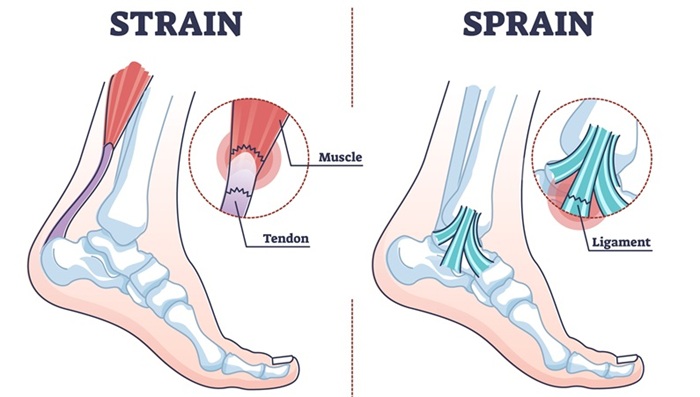
What’s the Difference Between a Sprain and a Strain?
Understanding the difference helps you appreciate what’s actually injured:
- Sprain – An injury to a ligament, the tough tissue that connects bones and stabilizes joints (like the ACL in the knee or ligaments in the ankle).
- Strain – An injury to a muscle or tendon, the tissues that generate movement and attach muscle to bone (like a hamstring strain or rotator cuff strain).
Both can range from mild overstretching to partial or complete tears.
Common Sprains in Sports
Sprains often happen when a joint is forced beyond its normal range of motion, especially during cutting, landing, or contact.
Typical sprain sites include:
- Ankle sprains – from rolling the ankle inward or outward when landing, stopping, or changing direction.
- Knee sprains – involving ligaments like the ACL, MCL, LCL, or meniscus structures during pivots, jumps, or tackles.
- Wrist and thumb sprains – from falls onto outstretched hands or gripping equipment awkwardly.
- Shoulder sprains – involving ligaments around the shoulder joint, often from falls or sudden traction.
Symptoms you might notice:
- Sudden pain at the joint
- Swelling and bruising
- Instability or a feeling the joint might “give out”
- Limited range of motion
- Pain when putting weight or pressure through the joint
Common Strains in Sports
Strains are more about muscles and tendons—often happening when you accelerate, decelerate, or change direction quickly.
Typical strain sites include:
- Hamstrings – sprinting, jumping, or sudden acceleration.
- Quadriceps – kicking, jumping, or powerful leg extension.
- Calf muscles – pushing off, sprinting, or abrupt changes in direction.
- Groin/adductors – side‑to‑side movements, cutting, and field sports.
- Rotator cuff muscles – throwing, swimming, lifting, or overhead movements.
Symptoms you might notice:
- Sharp pain in the muscle at the moment of injury
- Tenderness along the muscle or tendon
- Swelling or mild bruising
- Weakness or difficulty using the muscle normally
- Pain when stretching or contracting the muscle
Why Sprains and Strains Deserve Real Attention
Sprains and strains are often labeled as “minor injuries”—but they can have major consequences if not treated properly:
- Mild injuries can heal poorly and become chronic soreness or stiffness.
- Repeated sprains can lead to joint instability and early joint wear.
- Untreated strains can weaken muscles, increasing risk of future tears.
- Compensating for the injured area can cause new problems elsewhere (back, hips, opposite limb).
Early evaluation and treatment help ensure the injury heals correctly and reduces the risk of long‑term limitations.
How We Assess Sprains and Strains

At Quantum Pain & Spine Injury, your sprain or strain evaluation isn’t just a brief glance at the swollen area. We look at:
- Mechanism of injury – what you were doing, how you moved, and what you felt at the moment it happened.
- Symptom pattern – onset, location, severity, and what makes it better or worse.
- Physical examination –
- Stability testing for sprains (ligament integrity and joint stability).
- Strength, flexibility, and tenderness testing for strains.
- Range of motion and functional movement (squatting, stepping, reaching, etc.).
- Related structures – joints above and below, opposing muscles, and areas that may be compensating.
If we suspect a more serious injury (significant tear, fracture, or deep structural damage), we may recommend imaging or further tests as part of a comprehensive plan.
Treatment Options for Sprains and Strains
Your treatment depends on the location and severity of the injury, as well as your sport and timeline.
Common components include:
Acute Phase (First Few Days)
- Protection of the injured area (splints, braces, taping, or temporary non‑weight‑bearing).
- Swelling management (elevation, compression, icing as appropriate).
- Activity modification to prevent re‑injury.
- Pain and inflammation management when necessary.
Rehabilitation Phase
- Guided stretching to restore safe range of motion.
- Progressive strengthening of muscles around the injured area.
- Proprioception and balance work (especially for ankle and knee sprains).
- Sport‑specific drills that rebuild confidence and mechanics.
Advanced Care When Needed
- Bracing or taping strategies for joint support during return to play.
- Injections for persistent inflammation or pain in certain structures.
- Evaluation for surgical repair in severe or recurrent ligament or tendon tears.
The goal is to move from pain and protection to strength and performance—not just from “injured” to “no longer limping.”
Return‑to‑Sport After Sprains and Strains
Coming back too early is one of the most common reasons athletes re‑injure the same area.
We help you:
- Establish clear criteria for return (pain levels, strength benchmarks, stability tests, and functional drills).
- Progress gradually from basic movement to full practice and competition.
- Address any technique or training factors that contributed to the injury.
- Decide when and how to use taping or bracing during early return stages.
This makes your return safer and more sustainable.
Frequently Asked Questions
How do I know if my sprain or strain is mild or serious?
Severity depends on how much the ligament, muscle, or tendon is damaged. Severe injuries often cause significant swelling, bruising, instability, or weakness. If you cannot bear weight, lift, or move normally—or if pain is intense and persistent—you should be evaluated.
Should I keep playing or training if I can “push through” the pain?
Playing through sprains and strains can turn a small injury into a big one. If pain alters your movement or performance, it’s safer to stop and get evaluated. Continuing to push through often increases healing time and risk of recurrence.
Is it enough to rest for a week and then go back to normal?
Rest alone rarely restores strength, stability, and proper mechanics. You may feel better temporarily but still be vulnerable to re‑injury. Structured rehab and a graded return plan are much more effective.
Can a sprain or strain turn into a tear?
Yes. Continuing high‑stress activity on an injured ligament, muscle, or tendon can worsen damage. Early care reduces the risk of progressing from a partial injury to a larger tear.
Will I always need imaging for sprains and strains?
Not always. Mild injuries can be assessed clinically. Imaging is more likely if symptoms are severe, persistent, or suggest deeper structural damage (for example, significant joint instability or suspected major tendon tear).
Do I have to stop all activity until I’m fully healed?
Usually, no. Many athletes can continue some level of training—cross‑training, modified drills, or lower‑impact work—while the injured area heals. The key is choosing the right activities and avoiding movements that stress the injured structure.
What if I’ve sprained the same joint multiple times?
Recurrent sprains often signal underlying instability or incomplete rehabilitation. Evaluation and focused treatment—including strengthening, stability work, and possibly bracing or surgical consultation—can help break the cycle.
Take Sports Injuries Seriously—And Take Action
Sprains and strains may be common in sports, but that doesn’t mean you have to accept them as ongoing problems. With early, thoughtful care, you can heal fully and return to your sport stronger and more resilient.