
Torn Ligaments & Joint Injuries
Protecting Your Long‑Term Mobility and Performance
Some sports injuries go beyond “sprains and strains.” When a ligament tears or a joint is significantly damaged, the stakes are higher: stability, long‑term joint health, and your ability to keep playing the sports you love.
What’s the Difference Between a Sprain and a Strain?
Ligaments are the tough bands of tissue that connect bone to bone and keep joints stable. Joints themselves are complex structures made of cartilage, bone, ligaments, tendons, and joint capsule. When these are injured:
- The joint can become unstable, leading to “giving way” or repeated injuries.
- Cartilage can be damaged, increasing the risk of early arthritis.
- You may lose strength, confidence, and performance in your sport.
Commonly affected joints include:
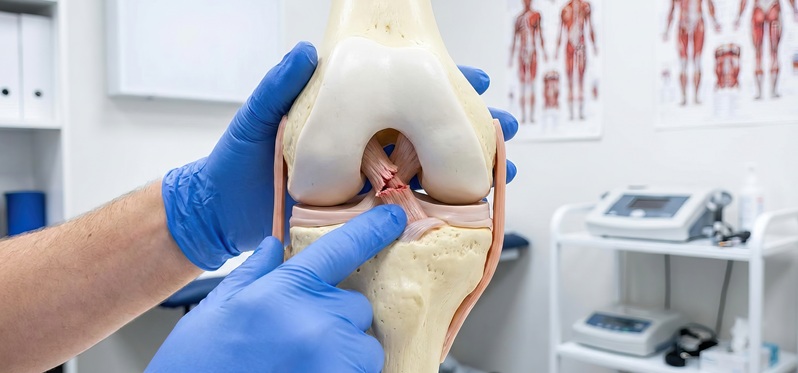
- Knees – ACL, MCL, LCL, PCL ligaments, and meniscus tears
- Shoulders – labral tears, rotator cuff tendon tears, dislocation‑related damage
- Ankles – high‑ankle ligament injuries, severe lateral ligament tears
- Wrists and thumbs – ligament injuries from falls or gripping equipment
- Elbows – ligament injuries in throwers and lifters
These injuries often require more than rest and basic rehab—they may need advanced imaging, interventional treatment, and, in some cases, surgery.
How Torn Ligament & Joint Injuries Typically Happen in Sports
You’ll often remember the moment it happened:
- A pivot or cut followed by a pop in the knee
- A landing from a jump with the foot or knee in an awkward position
- A collision or tackle that forces a joint beyond its normal range
- An overhead movement (throw, serve, lift) with sudden pain in the shoulder
- A fall onto an outstretched hand, injuring wrist or thumb ligaments
You might feel or hear:
- A pop or snap
- Immediate, sharp pain
- Rapid swelling
- A sense that “something is very wrong”
These are classic clues that a ligament or joint structure may be torn rather than just strained.
Signs You May Have a Torn Ligament or Significant Joint Injury
Some warning signs that go beyond a simple sprain:
- Instability – the joint feels like it might give out or actually does
- Persistent swelling – especially if it returns after activity
- Limited motion – difficulty bending, straightening, or rotating the joint
- Locking or catching – joint gets stuck or clicks painfully
- Weakness – inability to push off, jump, cut, or lift as before
- Pain deep inside the joint rather than just surface soreness
If you’re experiencing these, it’s important to be evaluated promptly to determine the extent of damage.
Common Torn Ligament & Joint Injuries by Area
Knee
- ACL tears – often from pivoting, cutting, or landing awkwardly
- MCL/LCL injuries – from side‑to‑side forces (valgus/varus stress)
- Meniscus tears – from twisting under load or deep squatting
- Multi‑ligament injuries – in high‑impact or contact situations
Shoulder
- Labral tears – from dislocations, overhead sports, or falls
- Rotator cuff tears – from lifting, throwing, or repetitive overhead motions
- AC joint injuries – from direct impact or falls onto the shoulder
Ankle
- High‑ankle sprains/tears – affecting ligaments above the ankle joint, usually from twisting with the foot planted
- Severe lateral ligament tears – from rolling the ankle under high load
Wrist, Thumb, and Elbow
- Scapholunate or other wrist ligament injuries – from falls or impact
- UCL (thumb) tears – common in skiers and ball‑handling sports
- UCL (elbow) injuries – in throwers and overhead athletes
Each of these injuries has specific implications for stability, sport demands, and long‑term joint health.
How We Evaluate Torn Ligaments and Joint Injuries
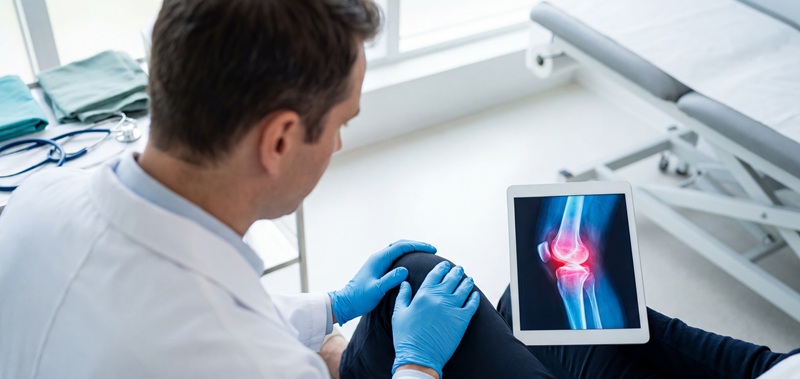
Because these injuries can be complex, evaluation is detailed and focused on both structure and function.
We typically:
- Review exact mechanism of injury – position, movement, and force involved.
- Assess symptom onset and progression – what you felt at the time and since.
- Perform joint‑specific tests to check stability, range of motion, and strength.
- Look at movement patterns that may have contributed or changed since the injury.
- Order appropriate imaging (e.g., MRI, advanced X‑ray views) when indicated to visualize ligaments, cartilage, and joint surfaces.
This allows us to distinguish between injuries that can be managed conservatively and those that truly need surgical consultation.
Treatment Options: Non‑Surgical and Surgical Paths
Non‑Surgical Management
Not every torn ligament or joint injury requires surgery. Depending on the specific structure and degree of tear, treatment may include:
- Structured immobilization or bracing to protect healing tissues
- Targeted physical therapy to restore motion, strength, and stability
- Activity modification and sport‑specific rehab to gradually reintroduce demands
- Interventional pain procedures when needed to manage pain and inflammation during rehab
- Neuromuscular training to improve joint control and reduce re‑injury risk
This route is more likely with partial tears, certain ligament injuries, and athletes whose sport demands can be matched to safe joint capacity.
Surgical Evaluation and Care
Surgery is considered when:
- Ligament or joint damage significantly compromises stability or function
- Non‑surgical care has not restored safe, reliable joint performance
- The specific injury has a high risk of long‑term joint damage without repair
Examples include:
- ACL reconstruction in athletes with instability and high‑demand sports
- Meniscus repair or trimming when mechanical symptoms and pain persist
- Labral and rotator cuff repairs in overhead athletes or those with significant weakness
- Stabilization procedures for recurrent shoulder dislocations
- Reconstruction of wrist or thumb ligaments in grip‑dependent sports
Our orthopedic surgeons and related specialists coordinate closely with pain and rehab teams so that surgical decisions and recovery plans fit your athletic and life goals.
Return‑to‑Sport After Torn Ligament & Joint Injuries
Returning to sport after a significant joint injury is about more than just time. We focus on:
- Meeting strength and stability benchmarks for the injured area and surrounding muscles
- Demonstrating movement quality—not just the ability to perform a skill, but to perform it safely
- Reintroducing sport‑specific drills in a stepwise fashion
- Addressing any psychological barriers (fear of re‑injury, loss of confidence)
- Clarifying criteria for full clearance (practice vs. competition, contact vs. non‑contact, position‑specific demands)
This makes your return more predictable and less likely to end in another major setback.
Frequently Asked Questions
How do I know if my ligament injury needs surgery or not?
It depends on the specific ligament, degree of tear, your symptoms, and your sport demands. Some partial tears and certain ligament injuries can do well with structured non‑surgical care. Others, especially those causing clear instability or mechanical symptoms, may be better served by surgical repair or reconstruction. Evaluation and imaging are critical for this decision.
If my pain is manageable, does that mean my joint is okay?
Not necessarily. Pain can improve while instability or mechanical problems remain. A joint may feel “pretty good” in everyday life but fail under sport demands. We look beyond pain to assess stability, strength, and function before deciding it’s truly healed.
Can I keep playing with a torn ligament if I brace the joint?
In some cases, modified participation with bracing and specific restrictions is possible, especially in lower‑demand situations. However, continuing high‑stress sport with significant instability can increase the risk of further damage. We’ll discuss safe options based on your specific injury.
What happens if I ignore a joint injury and just keep training?
You may be able to push through for a while, but repeated stress on an unstable or damaged joint can lead to more tears, cartilage damage, and early arthritis. It also increases the risk of sudden, severe re‑injury at an inconvenient time (like an important game or event).
How long does it take to get back to sport after ligament or joint surgery?
Recovery timelines vary widely depending on the procedure and sport. Some athletes return in a few months; others may need 6–12 months for full clearance. We’ll give a realistic timeline once your treatment plan is defined and adjust it based on your progress.
Will my joint ever be “as good as new”?
Many athletes return to high levels of performance after ligament or joint injury, especially with quality treatment and rehab. That said, some injuries do carry long‑term considerations. We’ll be honest about your prognosis and work to maximize your function and durability.
Can you coordinate with my coach, trainer, or physical therapist?
Yes—with your permission. Clear communication among your medical team, training staff, and coaching staff helps ensure that your rehab and return‑to‑sport plan are followed consistently.
Take Sports Injuries Seriously—And Take Action
Torn ligaments and significant joint injuries can feel like a turning point—but they don’t have to be the end of your athletic story. With accurate diagnosis, thoughtful treatment, and a structured return‑to‑sport plan, many athletes come back stronger, smarter, and more resilient.