
Back Injuries From Lifting
Causes, Symptoms, and Treatment
Back injuries from lifting are one of the most common reasons people stop training, miss work, or develop recurring pain that never fully goes away. In weightlifters, the lower back is consistently among the most frequently injured areas, with some research showing it accounts for 23% to 59% of all reported weightlifting injuries. If your back pain started during deadlifts, squats, rows, carries, or any heavy lift, it may be more than normal post-workout soreness. pmc.ncbi.nlm.nih
At Quantum Pain & Spine Injury, we evaluate back injuries from lifting carefully so we can identify whether the problem is a muscle strain, ligament sprain, disc injury, joint irritation, or a more serious spinal issue.
Why Back Injuries Happen During Lifting
Lifting puts a large amount of stress through the spine, especially when the back is loaded while resisting forward flexion or rotation. Squats and deadlifts are two of the most common lifts associated with lower back pain because they increase spinal loading, particularly when fatigue, mobility limits, or bracing problems are present.
Common contributors include:
- Lifting too much weight too soon.
- Training through fatigue when bracing quality drops.
- Poor hip hinge mechanics or limited hip mobility.
- Rounding the lower back under load.
- Returning to lifting too quickly after a flare-up.
- Repetitive heavy loading without enough recovery.
Even when form looks “pretty good,” the combination of high load, repeated volume, and fatigue can still overload the lumbar spine.
Common Back Injuries From Lifting
Muscle strain or ligament sprain
These are the most common lifting-related back injuries. They may cause sharp pain during a lift, stiffness afterward, or muscle spasm that makes it hard to move normally.
Disc irritation or herniation
Heavy lifting can increase pressure on spinal discs, especially if the spine rounds under load. Disc problems may cause deep back pain, pain with sitting, or symptoms that radiate into the buttock or leg.
Facet joint pain
The small joints at the back of the spine can become irritated with repeated extension, twisting, or compressive loading. This may feel like pain on one side of the lower back or a sharp catch with certain movements.
Stress-related spinal injury
In some lifters, repeated heavy loading can contribute to more serious structural stress in the spine. This is less common but important to recognize early, especially if pain is severe, persistent, or worsening.
Signs You May Have a Back Injury From Lifting
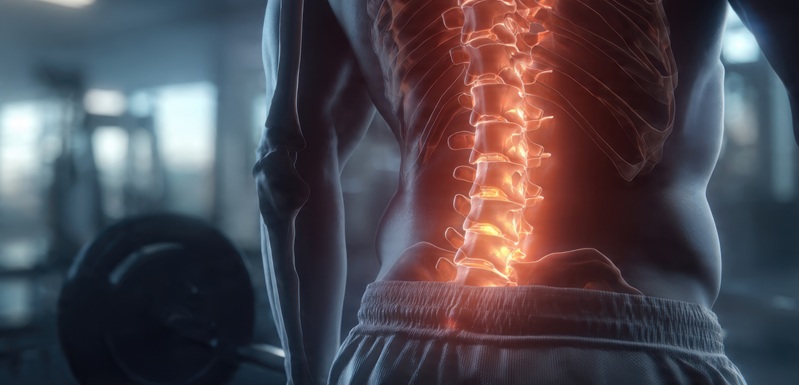
You should be evaluated if you notice:
- Pain during or immediately after a lift.
- Pain that gets worse with bending, twisting, or standing up.
- Muscle spasm or stiffness that does not improve.
- Pain that radiates into the buttock, thigh, or leg.
- Numbness, tingling, or weakness.
- Pain that keeps returning every time you train.
- Symptoms that are affecting sleep, work, or normal daily activity.
Pain that lingers for more than a few days or keeps recurring with the same movement should not be written off as simple soreness.
How We Evaluate Back Injuries From Lifting
We look at both the injury and the way you lift.
Your evaluation may include:
A review of the lift that caused the pain.
- Questions about recent changes in weight, volume, or technique.
- A physical exam of movement, strength, tenderness, and flexibility.
- Assessment of hip hinge mechanics, bracing, and spinal control.
- Imaging when needed to evaluate for disc injury, fracture, or other structural problems.
The goal is to determine what tissue is injured and what needs to change so you can recover without re-injuring the area.
Treatment Options
Treatment depends on the diagnosis, but may include:
- Temporary modification of lifting and training.
- Physical therapy to improve mobility, core control, and movement mechanics.
- Pain management for inflammation or acute symptom relief.
- Bracing or support when appropriate.
- Injections for selected spine-related pain conditions.
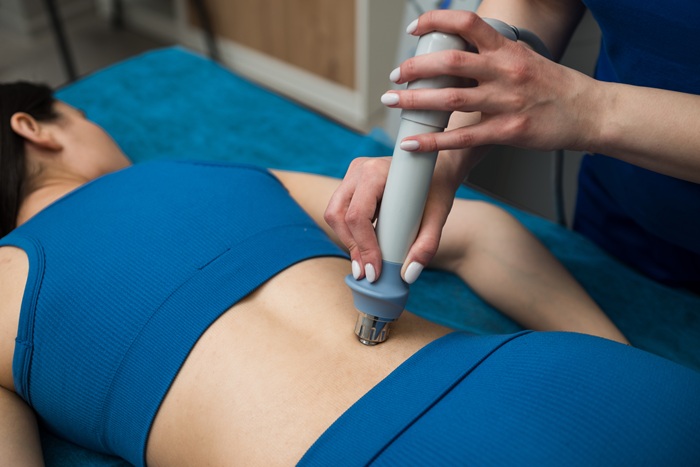
- Shockwave or regenerative medicine for certain stubborn soft-tissue injuries.
- Surgical evaluation if there is a significant disc, nerve, or structural problem.
Many lifters improve with careful load management, better movement patterns, and a structured return-to-training plan rather than complete shutdown.
Frequently Asked Questions
Can deadlifts cause lower back pain?
Yes. Deadlifts place significant load on the lumbar spine, and back pain is common when bracing, fatigue, mobility, or load progression are off.
Is back pain from lifting always a sign of a serious injury?
Not always, but persistent, radiating, or worsening pain should be evaluated. Muscle soreness usually improves in a few days and does not cause major weakness or numbness.
Do I need to stop lifting completely?
Not necessarily. In many cases, we can modify your training so you can stay active while the back heals.
How long does recovery take?
It depends on the injury. Mild strains may improve in weeks, while disc or nerve-related injuries can take longer.
Can poor squat form or rounded back position cause injury?
Yes. Spinal flexion under load can increase tissue strain and disc pressure, especially when combined with fatigue or heavy volume.
Will I need imaging?
Not always. Imaging is most helpful when we suspect a disc injury, fracture, or another deeper structural problem.
Don’t Lift Through Back Pain
If pain is getting in the way of your training, it’s time to find out what’s really going on. At Quantum Pain & Spine Injury, we can identify the source of your back pain and help you return to lifting with a safer, more effective plan.
References
- Ross R, et al. Chronic Lower Back Pain in Weight Lifters. 2023. Lower back injuries were one of the top injury sites in weightlifters, accounting for 23% to 59% of reported injuries.