
Concussion Symptoms
Recognizing Brain-Injury Symptoms That May Appear Right Away—or Later
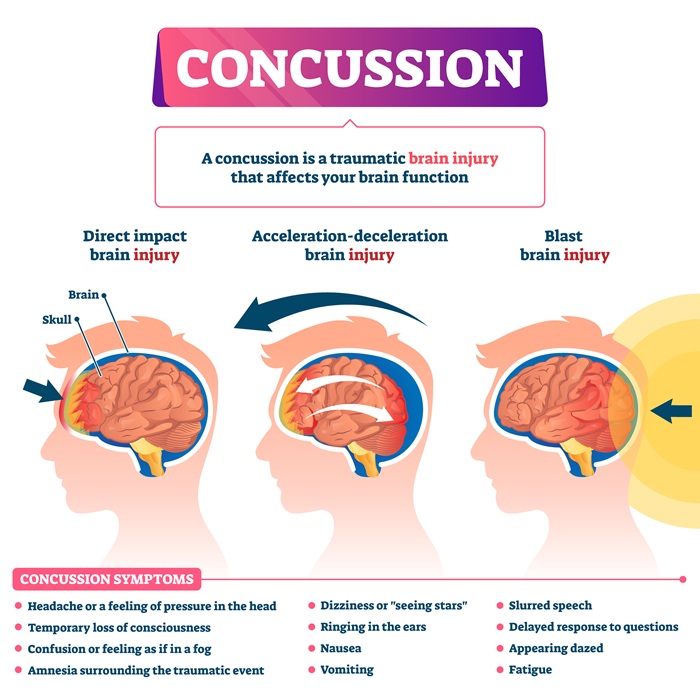
A concussion is a mild traumatic brain injury caused by a bump, blow, jolt to the head, or forceful impact to the body that makes the brain move rapidly inside the skull. Concussions can happen in car accidents, falls, sports, work incidents, assaults, and gym injuries. You do not have to lose consciousness to have a concussion.
Symptoms may appear immediately, but they can also develop or become more noticeable over the next several hours or days. If you have symptoms after an accident or impact, early evaluation can help identify a concussion, monitor recovery, and rule out more serious brain injury.
Why Concussion Symptoms Matter
Traumatic brain injury is a significant public-health concern, and symptoms can range from short-lived to persistent.
- The CDC reports approximately 214,110 traumatic-brain-injury-related hospitalizations in 2020. cdc.gov
- The CDC also reported 68,663 TBI-related deaths in 2023, representing more than 586 deaths per day in the United States. cdc.gov
- A CDC-supported review found that adult self-reported concussion/TBI prevalence ranged from 2% to 12% over a 12-month period, while lifetime prevalence estimates ranged from 19% to 29%. pmc.ncbi.nlm.nih.gov
Most people recover fully, but symptoms that worsen, persist, or interfere with work, school, sleep, or daily activities deserve medical attention.
Common Concussion Symptoms
A concussion can affect the body, thinking, emotions, sleep, and senses. Common symptoms include: cdc.gov
Physical Symptoms
- Headache or pressure in the head.
- Dizziness, balance problems, or feeling unsteady.
- Nausea or vomiting.
- Blurry vision, double vision, or other visual changes.
- Sensitivity to light or noise.
- Fatigue, low energy, or feeling slowed down.
- Ringing in the ears.
- Neck pain.
Thinking and Memory Symptoms
- Feeling foggy, hazy, groggy, or “not quite right.”
- Difficulty concentrating.
- Trouble remembering new information or events around the injury.
- Feeling mentally slowed down.
- Confusion or delayed responses to questions.
Emotional and Behavioral Symptoms
- Irritability or frustration.
- Anxiety or nervousness.
- Sadness or feeling more emotional than usual.
- Mood changes or personality changes.
Sleep-related Symptoms
- Sleeping more or less than usual.
- Trouble falling asleep.
- Trouble staying asleep.
- Feeling unusually drowsy.
Symptoms vary from person to person. Some people mainly notice headache and neck pain; others may first notice problems with focus, sleep, mood, balance, or vision.
Signs Someone Else May Notice
After a head injury, a friend, family member, coach, coworker, or caregiver may notice that the person:
- Appears dazed, stunned, confused, or unusually quiet.
- Answers questions slowly.
- Cannot remember events before or after the injury.
- Moves clumsily or seems unsteady.
- Has an unusual change in mood, behavior, or personality.
- Has difficulty following instructions or staying focused.
- Briefly loses consciousness.
These signs matter even if the injured person says they “feel fine.”

When Concussion Symptoms Are an Emergency
Call 911 or go to the nearest emergency department immediately after a head injury if you or someone else has:
- A headache that gets worse and does not go away.
- Repeated vomiting or worsening nausea.
- Increasing confusion, agitation, restlessness, or unusual behavior.
- Slurred speech.
- Weakness, numbness, decreased coordination, or trouble walking.
- A seizure or convulsion.
One pupil larger than the other, double vision, or major vision changes. - Loss of consciousness, severe drowsiness, or inability to wake up.
- Inability to recognize people or places.
These are danger signs that may point to a more serious brain injury and require emergency care.
When to Schedule a Concussion Evaluation
You should arrange a prompt evaluation if, after a bump, blow, jolt, crash, or fall, you experience:
- Headache, dizziness, nausea, or light sensitivity.
- Brain fog, memory problems, or difficulty concentrating.
- New sleep changes, mood changes, anxiety, or irritability.
- Neck pain with headache or visual symptoms.
- Symptoms that are not improving, are worsening, or return when you resume work, exercise, or daily activity.
- A prior history of concussion or repeated head impacts.
A concussion can occur without a visible head injury or a loss of consciousness. When in doubt, it is safer to be evaluated.
How we evaluate concussion symptoms
At Quantum Pain & Spine Injury, a concussion evaluation may include:
- A detailed review of the accident, impact, symptoms, and timing.
- Assessment of headache, neck pain, dizziness, balance, vision, sleep, mood, and memory.
- Neurological examination of coordination, strength, sensation, reflexes, and eye movements.
- Concussion testing when appropriate.
- Evaluation for associated injuries such as whiplash, cervical spine injury, or nerve irritation.
- Referral for emergency imaging or specialty care when symptoms or examination findings suggest a more serious injury.
The goal is to identify the full injury picture—not just treat the headache.
Treatment and Recovery
Concussion recovery is individualized. Treatment may include:
- Guidance on appropriate physical and cognitive activity.
- A gradual, symptom-guided return to work, school, exercise, and sport.
- Headache and neck-pain management.
- Physical therapy or vestibular rehabilitation for balance, dizziness, or movement-related symptoms.
- Vision-focused evaluation or therapy when visual symptoms persist.
- Behavioral-health support for anxiety, mood changes, sleep disruption, or post-accident stress.
- Specialist referral when symptoms are persistent, complex, or worsening.
Most people improve within days to weeks, but symptoms can last longer for some individuals. Persistent post-concussion symptoms may include headaches, dizziness, fatigue, poor concentration, memory problems, sleep changes, anxiety, and depression.
Frequently Asked Questions
Can I have a concussion without passing out?
Yes. Loss of consciousness is not required for a concussion. Headache, dizziness, nausea, brain fog, memory problems, balance changes, and sensitivity to light or noise can all occur without passing out.
Can concussion symptoms start the next day?
Yes. Some symptoms are immediate, while others become more noticeable over hours or days as adrenaline fades, inflammation develops, or normal activity places more demand on the brain.
Can neck pain and concussion happen together?
Yes. Car accidents, falls, and sports impacts can injure both the head and neck. Neck injury can also contribute to headaches, dizziness, and other symptoms that overlap with concussion.
Should I sleep after a concussion?
Sleep can be part of recovery, but someone should seek emergency care first if there are danger signs such as worsening headache, repeated vomiting, confusion, severe drowsiness, weakness, seizures, or inability to wake up.
How long do concussion symptoms last?
Many people improve within days to weeks. Persistent symptoms can last weeks to months and should be evaluated, especially if they interfere with work, school, driving, exercise, or daily life.
Get Help Today!
If you have headache, dizziness, brain fog, nausea, vision changes, balance problems, or sleep and mood changes after an accident or impact, don’t assume it will resolve on its own. Quantum Pain & Spine Injury can evaluate your concussion symptoms, identify related neck or pain conditions, and build a personalized recovery plan.
References
- Centers for Disease Control and Prevention. TBI Data: Traumatic Brain Injury & Concussion.
- Centers for Disease Control and Prevention-supported review. Summary of the CDC’s Self-Reported Concussion/TBI Prevalence Research. National Library of Medicine, 2024.
- Centers for Disease Control and Prevention. Signs and Symptoms of Concussion.