
Surgical Evaluation
Expert Guidance When an Injury May Need More Than Conservative Care
Most injuries do not require surgery. Many people recover with a combination of diagnosis, medication management, rehabilitation, activity modification, and targeted pain procedures. But when symptoms point to a significant structural injury, progressive nerve problem, or condition that has not improved with appropriate non-surgical care, a surgical evaluation can provide important answers.
Quantum Pain & Spine Injury coordinates referrals to orthopedic, spine, and neurosurgical specialists when clinically appropriate. The purpose of a consultation is not to rush toward surgery—it is to clarify your options, determine whether surgery may help, and make sure serious conditions are not overlooked.

When a Surgical Evaluation May Help
A surgical consultation may be recommended when an exam, imaging study, or treatment history suggests that a structural problem could benefit from specialist review. This may include:
- Fractures, dislocations, or injuries causing joint instability.
- Complete or significant tendon, ligament, cartilage, or labral tears.
- Persistent shoulder, hip, knee, ankle, wrist, hand, elbow, or other joint symptoms.
- Herniated discs, spinal stenosis, or other causes of nerve compression.
- Ongoing neck or back pain with radiating arm or leg pain.
- Persistent numbness, tingling, weakness, or loss of coordination.
- Progressive loss of function despite appropriate conservative care.
- Symptoms that have not responded to rehabilitation, medication, or interventional pain procedures.
- Conditions requiring an orthopedic, spine, or neurosurgical opinion before returning to work, sports, or physically demanding activity.
A surgical opinion may confirm that non-surgical treatment remains the right choice. It can also help identify when timely intervention is needed to protect function, stability, or nerve health.
The Right Specialist for The Problem
Your physical therapist determines the specific treatment plan. Depending on your needs, rehabilitation may include:
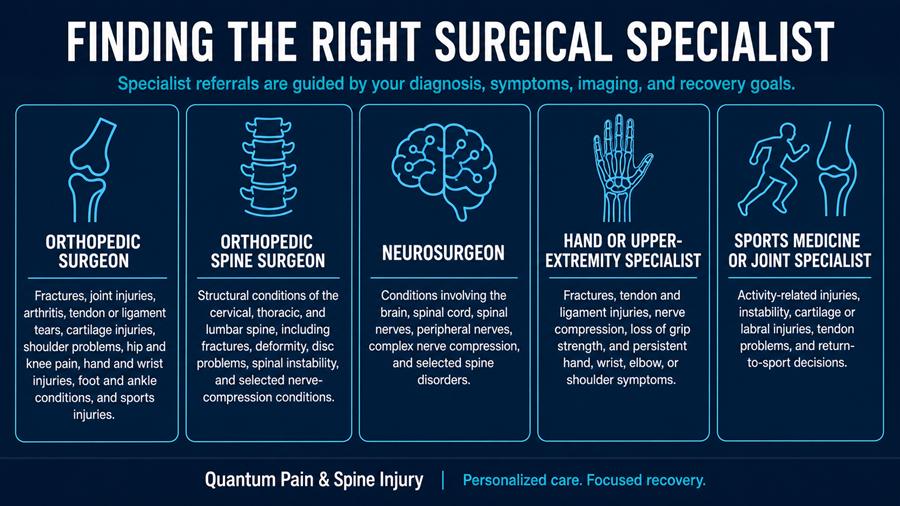
The American Academy of Orthopaedic Surgeons provides evidence-based clinical practice guidance for orthopedic diagnostic, treatment, and postoperative decision-making. aaos
What Happens During a Surgical Evaluation
A surgical consultation is an opportunity to understand the diagnosis, review your options, and ask direct questions. The specialist may:
- Review your injury history, symptoms, activity limitations, prior treatment, and medical history.
- Perform a focused physical and neurological examination.
- Review X-rays, MRI, CT scans, ultrasound studies, EMG testing, or prior procedure records.
- Discuss whether your symptoms match the imaging findings.
- Recommend continued conservative treatment, additional testing, a procedure, or surgery.
- Explain the expected goals, risks, recovery process, rehabilitation needs, and alternatives to surgery.
- Provide return-to-work, activity, lifting, driving, or sport recommendations.
If surgery is not appropriate, the consultation can still be valuable. You may leave with reassurance, a clearer diagnosis, and a more focused non-surgical treatment plan.
Common Conditions Referred for Evaluation
Orthopedic Conditions
Orthopedic referral may be appropriate for:
- Suspected or confirmed fractures.
- Shoulder instability, rotator cuff tears, labral injuries, or persistent shoulder pain.
- Hip pain, labral tears, tendon injuries, or joint impingement.
- Knee ligament, meniscus, cartilage, or patellar instability concerns.
- Chronic ankle instability, tendon tears, or persistent foot and ankle pain.
- Hand, wrist, elbow, or upper-extremity injuries.
- Injuries involving work, recreation, repetitive use, or sports.
Spine Conditions
Spine evaluation may be appropriate for:
- Persistent neck or back pain after an accident or injury.
- Herniated or bulging discs with symptoms that match nerve irritation.
- Sciatica or radiating leg pain.
- Arm pain, numbness, or weakness from cervical nerve compression.
- Spinal stenosis, instability, fracture, or deformity.
- Pain that continues despite rehabilitation, appropriate procedures, and other conservative care.
- Progressive neurological symptoms, including increasing weakness or loss of coordination.
Neurological and Nerve Conditions
Neurosurgical or neurological referral may be appropriate for:
- Progressive weakness, numbness, or loss of function.
- Persistent symptoms of nerve compression.
- Severe radiating pain that does not improve with non-surgical care.
- Peripheral nerve injury or entrapment.
- Spinal cord compression concerns.
- Selected brain, concussion, or neurological symptoms requiring specialist assessment.
Surgery is not always the answer
A recommendation for surgical evaluation does not mean surgery is inevitable. In many cases, the specialist may recommend continuing non-surgical care, modifying rehabilitation, trying a targeted procedure, monitoring symptoms, or obtaining additional testing.
Surgery is generally considered when the potential benefit—such as restoring stability, relieving significant nerve compression, repairing a major tear, or improving function—is greater than the risks and expected recovery demands. The decision should reflect your diagnosis, symptoms, neurological status, functional limitations, health history, goals, and response to earlier treatment.
Warning Signs That Need Urgent Care

Do not wait for a routine office referral if you have symptoms that could indicate a serious neurological or spinal emergency. Call 911 or go to the nearest emergency department immediately for:
- New loss of bladder or bowel control.
- Numbness in the groin, inner thighs, buttocks, or genital area.
- Sudden or worsening weakness in an arm or leg.
- New difficulty walking, severe loss of coordination, or inability to move part of the body.
- Severe neck or back pain after major trauma, especially with numbness, tingling, or weakness.
- Trouble breathing after a head, neck, or spine injury.
- New confusion, seizure, fainting, repeated vomiting, or severe headache after a head injury.
The National Institute of Neurological Disorders and Stroke lists weakness, sensory changes, walking problems, and loss of bowel or bladder control among potential symptoms of spinal cord injury that warrant emergency attention. Mayo Clinic likewise identifies severe weakness, loss of coordination, changes in sensation, and bowel or bladder loss of control after an accident as emergency symptoms. ninds.nih
Frequently Asked Questions
Does a referral to a surgeon mean I need surgery?
No. A referral provides a specialist opinion. The surgeon may recommend continued conservative care, further testing, monitoring, a minimally invasive procedure, or surgery only if it is likely to offer meaningful benefit.
Should I see an orthopedic surgeon, spine surgeon, or neurosurgeon?
It depends on the diagnosis. Orthopedic surgeons commonly evaluate bone, joint, tendon, ligament, and sports-related injuries. Orthopedic spine surgeons and neurosurgeons evaluate many spine and nerve-compression conditions. We help direct your referral based on your symptoms, examination, and imaging findings.
Can I have surgery if physical therapy has not helped?
Possibly, but physical therapy alone does not determine surgical candidacy. The decision depends on your diagnosis, imaging, symptoms, functional limits, neurological exam, and response to the full course of appropriate treatment.
What should I bring to my surgical consultation?
Bring imaging reports and images if available, a medication list, records of prior treatment, your injury details, and a list of questions or activity limitations you want to discuss.
Can you help with recovery after surgery?
Yes. We can help coordinate post-surgical rehabilitation referrals, pain-management follow-up, activity guidance, and communication with your surgical team when appropriate.
Get Help Today!
If ongoing pain, instability, weakness, numbness, or loss of function is keeping you from work, daily activity, exercise, or sleep, you may benefit from a specialist opinion. Quantum Pain & Spine Injury can evaluate your condition, review your treatment history, and coordinate an orthopedic, spine, or neurosurgical referral when appropriate.
References
- American Academy of Orthopaedic Surgeons. Clinical Practice Guidelines.[aaos]
- National Institute of Neurological Disorders and Stroke. Spinal Cord Injury.[ninds.nih]
- Mayo Clinic. Spinal Cord Injury: Symptoms and Causes.[mayoclinic]