
Concussion Treatment After a Car Accident
Hit your head or feel “off” after a crash?
Even if you never lost consciousness, you may have a concussion—a mild traumatic brain injury that needs careful evaluation and structured treatment. Concussions are common after car accidents and, when properly treated, most people recover fully. When they’re ignored or mismanaged, symptoms can linger for months or years.
At Quantum Pain & Spine Injury, our neurosurgeons, concussion specialists, and behavioral health clinicians provide coordinated, evidence‑based concussion care specifically tailored to auto collision injuries.
Why Concussion Treatment After a Car Accident Matters
Concussions aren’t just “getting your bell rung.” They are brain injuries that change how your brain functions for a period of time. After a car accident, you may have hit your head on the steering wheel, headrest, window, airbag, or even experienced a whiplash motion that caused the brain to move within the skull.
Concussion Statistics
- An estimated 1–3 million concussions occur annually in the United States, and a significant portion are caused by motor vehicle crashes.
- Up to 50% of concussions are never diagnosed, often because symptoms are subtle or delayed.
- Most people with a properly managed concussion recover in 7–30 days, but 10–30% develop prolonged symptoms (post‑concussion syndrome).
- Experiencing another head injury before fully recovering from a concussion greatly increases the risk of serious, long‑term complications.
- Early, structured concussion care is associated with faster return to work and daily activities compared with “rest only” approaches.
These numbers highlight why it’s important not to dismiss head injury symptoms after a car accident—and why structured follow‑up matters.
Common Neck Injuries After Car Accidents
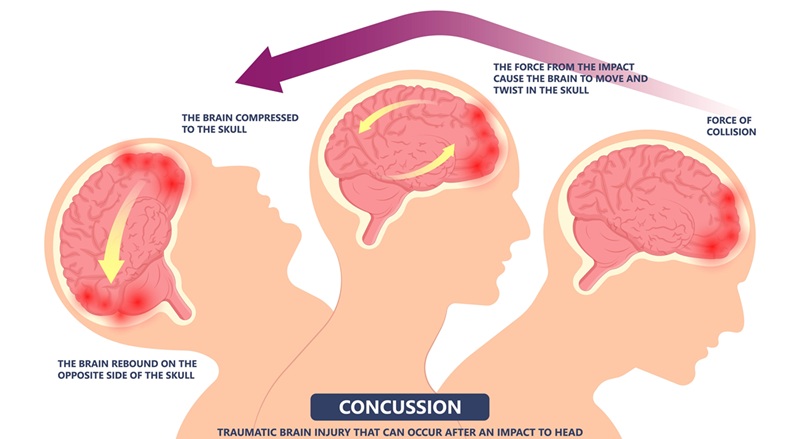
Concussion symptoms may start immediately or emerge hours to days later. You can have a concussion even if:
- You never lost consciousness
- You walked away from the accident
- Imaging (like a CT scan) at the ER was “normal”
Physical symptoms
- Headache or pressure in the head
- Dizziness or balance problems
- Nausea or vomiting
- Sensitivity to light or noise
- Blurred or double vision
- Fatigue or feeling unusually tired
- Ringing in the ears (tinnitus)
- Neck pain or stiffness
Cognitive and mental symptoms
- Feeling “foggy,” slowed down, or detached
- Trouble concentrating or focusing
- Short‑term memory problems (forgetting conversations, events, or instructions)
- Difficulty multitasking
Slower reaction times
Emotional and sleep‑related symptoms
- Irritability or mood swings
- Increased anxiety or feeling on edge
- Sadness or depression
- Difficulty falling asleep or staying asleep
- Sleeping more or less than usual
- Nightmares or restless sleep
Any combination of these symptoms after a car accident warrants a formal concussion evaluation.
Our Concussion Evaluation Process
We use a structured, step‑by‑step approach to understand the full impact of your head injury.
1. Detailed accident and symptom history
We’ll ask about:
- How the collision occurred (direction of impact, seat position, restraints)
- Whether your head struck anything or your neck was whipped
- Whether you lost consciousness or “saw stars”
- Immediate symptoms at the scene and in the hours/days afterward
- Changes in mood, sleep, and concentration
- Prior concussions or head injuries
This history helps us identify risk factors for more complex recovery.
2. Neurological and physical examination
Our neurosurgeons and concussion specialists assess:
- Mental status (orientation, memory, concentration)
- Balance and coordination
- Eye movements and pupil responses
- Reflexes and strength
- Sensation in face, arms, and legs
- Neck mobility and tenderness
3. Concussion‑specific testing
We use standardized tools and tasks to measure:
- Cognitive function (attention, memory, processing speed)
- Reaction times
- Balance and gait
- Visual tracking and eye coordination
- Symptom severity scores over time
These tests provide a baseline so we can track your recovery.
4. Imaging when indicated
Not every concussion requires imaging, but we may obtain:
- CT scans to rule out bleeding, skull fractures, or major structural injury when red‑flag symptoms are present
- MRI if symptoms persist or there are concerns about deeper brain injury, microstructural damage, or other neurological conditions
Normal imaging does not mean you didn’t have a concussion—but it does help rule out more dangerous conditions.
Our Treatment Approach: Active, Structured Recovery
We don’t rely on “sit in a dark room and wait.” Instead, we follow an active recovery model that combines rest, gradual activity, and targeted therapies.
Phase 1: Initial stabilization (first 24–72 hours)
- Short period of relative rest: limit screen time, heavy mental tasks, and strenuous physical activity
- Pain control for headaches (typically non‑narcotic options)
- Sleep hygiene guidance and basic hydration/nutrition support
- Clear instructions on which symptoms require urgent re‑evaluation
This phase is about protecting your brain while we gather full assessment data.
Phase 2: Gradual return to activity
After the initial rest period, we guide you through a stepwise program:
- Light daily activities
- Short walks, light household tasks
- Brief, structured periods of screen use
- Simple cognitive tasks (e.g., reading or puzzles)
- Increased cognitive load
- Longer work or school tasks with breaks
- Controlled increase in reading, writing, and computer work
- Adjusted schedules and accommodations as needed
- Light to moderate physical exercise
- Stationary bike, brisk walking, light strength work
- Close monitoring for symptom flare‑ups
- Return to full work, school, or sport
- Based on complete symptom resolution and normal testing
- Written clearance provided when appropriate
If symptoms flare at any step, we adjust and step back to the previous level.
Frequently Asked Questions
Do I have a concussion if I never lost consciousness?
Yes, it’s very possible. Most concussions do not involve loss of consciousness. Any combination of headache, dizziness, confusion, or cognitive changes after a car accident can indicate a concussion, even if you stayed awake the whole time.
How long does concussion recovery take?
Many patients improve significantly within 7–14 days, and most recover within a few weeks with proper management. However, some people—especially those with multiple concussions, pre‑existing conditions, or severe symptoms—may take several months. We monitor your progress and adjust your plan until you’re truly recovered, not just “better than before.”
If my CT scan at the ER was normal, why do I still feel so bad?
CT scans are excellent at detecting bleeding, fractures, and major structural issues, but they don’t show the functional changes that define a concussion. You can have a normal CT and still have significant symptoms. That’s why follow‑up concussion care is essential.
Is complete rest the best treatment?
Short‑term rest is important, but prolonged total rest can actually slow recovery. Current best practice uses relative rest followed by gradual, guided activity, which is what we provide—moving at the pace your brain can tolerate.
Can I work or go to school with a concussion?
Often, yes—with modifications. We may recommend shorter days, more breaks, reduced screen time, or temporary changes in workload. The goal is to stay engaged without overloading your brain. We’ll provide documentation for your employer, school, or professor.
When can I drive again?
You should not drive until your vision, reaction time, attention, and judgment are back to normal. If you feel dizzy, foggy, easily distracted, or have slowed reaction times, it’s safer to avoid driving. We’ll review your symptoms and testing before clearing you.
What if my symptoms are getting worse instead of better?
Worsening symptoms—especially severe headache, repeated vomiting, confusion, or new neurological changes—need prompt re‑evaluation. In some cases, that means going to the emergency room; in others, an urgent clinic visit. Don’t assume worsening symptoms are “normal healing.”
Can I exercise with a concussion?
In the early phase, only very light activity is appropriate. As your symptoms improve, light to moderate aerobic exercise under supervision can actually help recovery. We’ll tell you what level and type of exercise is safe at each stage.
What if I’ve had multiple concussions before?
Each additional concussion typically increases your risk of prolonged recovery and long‑term effects. That makes expert management especially important. We’ll take a more conservative approach and closely monitor your progress before clearing you for full activity.
Do I need treatment for emotional changes, or will they just pass?
Emotional symptoms—anxiety, irritability, depression, fear of driving—are common after concussion and after traumatic events like car accidents. They often improve as your brain heals, but in many cases, targeted therapy and, when appropriate, medication make recovery faster and more complete. Ignoring emotional symptoms can prolong overall recovery.
Take the Next Step Toward Recovery
If you’ve had a car accident and now have headaches, dizziness, brain fog, mood changes, or any other concussion symptoms, don’t wait and hope they’ll disappear on their own. Early, structured care gives your brain the best chance to heal fully.