
Hidden Injuries After a Car Accident

Why Feeling “Fine” After a Crash Can Still Be Dangerous
Walking away from a car accident without obvious injuries can feel like a relief—but it can also be misleading. Many serious problems don’t show up right away. “Hidden injuries” are damage to your body that may not cause immediate symptoms at the scene, yet can lead to significant pain, disability, or health complications days, weeks, or even months later.
At Quantum Pain & Spine Injury, we specialize in identifying and treating these hidden injuries before they become long‑term problems. If you’ve been in a crash—even a “minor” one—and something doesn’t feel right, this page will help you understand what to watch for and when to get evaluated.
What Are Hidden Injuries?
Hidden injuries are physical or neurological problems that:
- Don’t cause severe symptoms right after the accident
- May be masked by adrenaline, shock, or distraction
- Gradually worsen as inflammation builds or damage progresses
- Often don’t show on basic ER screening unless specifically looked for
Common examples include:
- Whiplash and other soft‑tissue neck injuries
- Disc injuries in the neck or back
- Concussions and mild traumatic brain injuries
- Nerve damage (radiculopathy, neuropathy)
- Microfractures and small joint injuries
- Internal soft‑tissue injuries (muscle, tendon, ligament)
- Post‑traumatic stress and emotional trauma
You do not need a high‑speed collision or a totaled car to sustain hidden injuries. Even low‑speed rear‑end crashes can transmit enough force to injure your spine, brain, and soft tissues.
Why Injuries Stay “Hidden” at First
Several factors can delay or mask symptoms after a car accident:
- Adrenaline and shock: Immediately after a crash, your body releases stress hormones that blunt pain and keep you focused on immediate safety, not subtle symptoms.
- Inflammation takes time: Soft‑tissue injuries and disc problems often worsen over hours to days as swelling and inflammation increase.
- Muscle guarding: Your muscles tighten to protect injured areas, which may temporarily limit movement or pain—but can create new pain patterns later.
- Delayed nerve irritation: Disc bulges or joint swelling may initially be small, then enlarge enough to compress nerves and cause symptoms later on.
- Attention on obvious injuries: Visible cuts, bruises, or broken bones can distract from underlying neck, back, or brain injuries.
Because of these factors, feeling “okay” at the scene does not guarantee you are injury‑free.
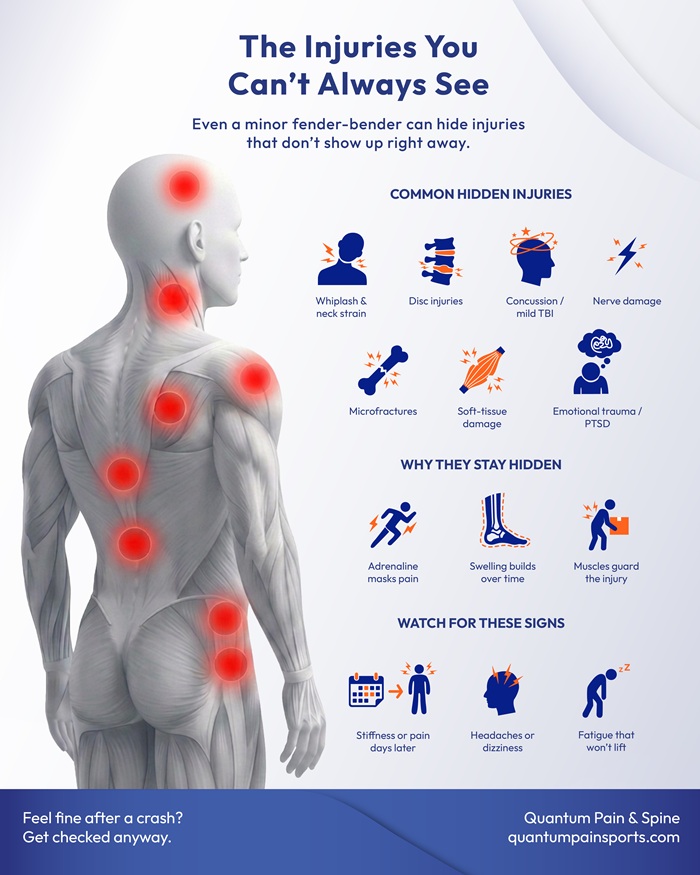
Common Hidden Injuries After a Car Accident
Whiplash and Soft‑Tissue Neck Injuries
Whiplash occurs when your head and neck whip forward and backward quickly, stretching and sometimes tearing muscles, ligaments, and tendons.
Typical delayed symptoms:
- Neck pain and stiffness starting 24–72 hours after the crash
- Headaches at the base of the skull
- Shoulder or upper‑back pain
- Limited ability to turn or bend your neck
- Dizziness or fatigue
Left untreated, whiplash can lead to chronic neck pain, headaches, and reduced mobility.
Disc Injuries in the Neck and Back
Intervertebral discs act as cushions between the vertebrae. Sudden impact can cause them to bulge or herniate.
Delayed signs of disc injury:
- Deep aching pain in the neck or back
- Pain radiating into arms, hands, buttocks, or legs
- Numbness, tingling, or “pins and needles” sensations
- Weakness when lifting, gripping, or walking
- Pain that worsens with sitting, bending, or twisting
Disc injuries may not be visible on simple X‑rays and often require MRI for diagnosis.
Concussions and Mild Traumatic Brain Injuries
You don’t have to hit your head hard or black out to have a concussion. The brain can be injured simply by rapid acceleration and deceleration inside the skull.
Examples of delayed concussion symptoms:
- Headaches that start hours or days later
- Feeling “foggy” or slowed down
- Difficulty concentrating or remembering things
- Irritability, anxiety, or mood changes
- Sensitivity to light or noise
- Sleep disturbances
Without proper management, concussion symptoms can persist and affect work, school, and relationships.
Nerve Injuries (Radiculopathy and Neuropathy)
Hidden nerve injuries often come from disc problems, swelling around nerve roots, or direct trauma.
Delayed nerve‑related symptoms:
- Shooting, electric, or burning pain down one arm or leg
- Numbness or tingling in hands, fingers, feet, or toes
- Weakness in grip, arm, leg, or foot
- Increased pain at night or with certain positions
These symptoms may start mild and become more noticeable as swelling increases or structures shift.
Microfractures and Joint Injuries
Not all fractures are obvious right away. Small cracks in bones and cartilage injuries in joints may be missed initially.
Possible signs:
- Localized pain that worsens with use
- Swelling or bruising that develops over time
- Stiffness or instability in a joint
- Pain with weight‑bearing or specific movements
Untreated microfractures and joint injuries can lead to arthritis and chronic pain.
Internal Soft‑Tissue Injuries
Seatbelts, airbags, and bracing against impact can injure muscles, tendons, and ligaments.
You may notice later:
- Deep muscle pain in chest, abdomen, or back
- Persistent soreness that doesn’t improve with rest
- Reduced flexibility or strength
- Pain that flares with specific activities or positions
These injuries are often mistaken for “normal soreness” but can be significant.
Emotional Trauma and PTSD
Emotional injuries are easily overlooked yet very real. Psychological responses can appear days to weeks after the collision.
Common delayed emotional symptoms:
- Anxiety or panic about driving or riding in cars
- Flashbacks or intrusive memories of the crash
- Nightmares or sleep disturbances
- Feeling on edge, jumpy, or hyper‑alert
- Changes in mood, appetite, or interest in normal activities
Without support, these symptoms can evolve into post‑traumatic stress disorder (PTSD).
Warning Signs That a “Hidden” Injury Is Emerging

You should be evaluated promptly if, in the days or weeks after a collision, you experience:
- New neck or back pain that wasn’t present immediately after the crash
- Pain that is getting worse instead of better
- Headaches, dizziness, or “brain fog”
- Numbness, tingling, or weakness in arms or legs
- Trouble focusing, remembering, or managing everyday tasks
- Increasing difficulty sleeping or worsening nightmares
- Anxiety, irritability, or fear that started after the accident
- Stiffness or limited movement that makes daily activities harder
- Pain that interferes with work, school, or exercise
These are strong clues that hidden injuries are now making themselves known.
How Quantum Identifies Hidden Injuries
Our approach is designed specifically for people who may have more going on than first meets the eye.
Comprehensive History and Symptom Review
We look beyond the immediate aftermath of the crash and ask about:
- How the collision occurred (direction and force of impact)
- Seat position, headrest position, and restraints used
- Immediate and delayed symptoms
- Changes in sleep, mood, concentration, or energy
- Prior injuries or conditions that could be affected
Detailed Physical and Neurological Examination
Our physicians and specialists assess:
- Neck and back range of motion
- Muscle strength, tone, and tenderness
- Joint stability and alignment
- Reflexes and sensation
- Balance, coordination, and gait
- Cognitive function and emotional status
Targeted Diagnostic Testing
When indicated, we use:
- X‑rays for fractures and alignment issues
- MRI for discs, nerves, ligaments, and soft tissues
- CT scans for complex bone injuries
- Nerve studies for suspected nerve damage
- Concussion and cognitive testing for brain injuries
- Balance and vestibular testing for dizziness
By combining clinical evaluation with appropriate imaging and testing, we uncover injuries that standard ER screenings often miss.
Treatment Options for Hidden Injuries
Once we identify what’s going on, we build a tailored treatment plan, which may include:
For Neck and Back Injuries
- For Neck and Back Injuries
Physical therapy and rehabilitation - Interventional procedures (epidural steroid injections, facet joint injections, nerve blocks, radiofrequency ablation)
- Shockwave or magnetic therapies for soft‑tissue healing
- Regenerative medicine (e.g., PRP‑based approaches)
- Bracing and supportive devices
- Surgical evaluation when structural problems require it
For Concussions and Brain Injuries
- Structured rest and gradual return‑to‑activity plans
- Vestibular and vision rehabilitation
- Cognitive rehabilitation exercises
- Headache management and pain procedures
- Transcranial magnetic stimulation (TMS) in select cases
- Coordinated follow‑up for work, driving, and sports clearance
For Nerve Injuries
- Medications targeting nerve pain
- Targeted injections and nerve blocks
- Physical therapy for nerve gliding and strengthening
- Surgical decompression when necessary
For Emotional Trauma and PTSD
- Trauma‑focused therapy and counseling
- Medication management when appropriate
- Integrated care with your physical treatment team
- Support for returning to driving and normal activities
Why You Shouldn’t Wait “Just to See”
Hidden injuries rarely get better by being ignored. Waiting can:
- Turn a treatable acute problem into a chronic condition
- Increase the risk of permanent nerve damage or structural changes
- Make it harder to link your symptoms to the accident for insurance purposes
- Complicate your ability to work, care for your family, or enjoy normal activities
Early evaluation allows us to catch issues while they’re easier to treat, and gives you the peace of mind of knowing what’s going on inside your body.
Frequently Asked Questions
If I felt fine right after the accident but hurt now, is that still from the crash?
Very likely, yes. Delayed pain and symptoms are extremely common after car accidents. The combination of adrenaline, shock, and gradual inflammation means many injuries don’t show up until hours or days later. We take your timing and symptom pattern into account when evaluating you.
The ER told me I was okay. Why do I still feel bad?
Emergency departments focus on life‑threatening injuries—bleeding, fractures, major organ damage. They may not fully assess soft‑tissue, disc, nerve, or subtle brain injuries. It’s common to be discharged from the ER and later discover hidden problems that need follow‑up care.
Do I need advanced imaging if my X‑ray was normal?
X‑rays show bones, not soft tissues, discs, or nerves. If you have persistent pain, radiating symptoms, or neurological changes, more detailed imaging such as MRI may be appropriate to look for hidden injuries not seen on X‑ray.
Can a “minor” accident really cause serious injuries?
Yes. Even low‑speed impacts can transmit significant force to the spine and brain, especially in rear‑end collisions. Vehicle damage doesn’t always correlate with injury severity—sometimes the car absorbs the force, sometimes your body does.
What if my symptoms are mostly emotional, like anxiety or fear of driving?
Emotional symptoms after a crash are real and important. They can be part of post‑traumatic stress and may also overlap with concussion‑related changes. Treating these symptoms early improves both emotional well‑being and physical recovery.
Will my insurance cover evaluation for hidden injuries?
Most auto insurance policies include coverage for accident‑related medical care. In many cases, early evaluation and documentation make it easier to obtain coverage. Our team can help you understand your options and provide necessary records.
How long after an accident can hidden injuries still show up?
Some symptoms appear within days; others may develop or become noticeable over weeks. While earlier evaluation is better, it’s never “too late” to investigate ongoing pain, neurological symptoms, or emotional changes that started after a crash.
What if my pain is mild but persistent?
Persistent mild pain can still indicate underlying injury. Our goal is not just to treat severe cases, but to prevent mild problems from becoming serious. If pain, stiffness, or other symptoms haven’t resolved, it’s worth being evaluated.
Can you help if I’m already seeing another provider?
Yes. We often co‑manage care with primary‑care physicians, chiropractors, physical therapists, and other specialists. Our role is to provide targeted evaluation and advanced treatment options for accident‑related injuries.
Take Hidden Injuries Seriously—Even If They Took Time to Show Up
If you’ve been in a car accident and are now noticing pain, stiffness, headaches, dizziness, numbness, or emotional changes, don’t dismiss them as “just stress” or “normal soreness.”